DMOs and the New Visibility Economy
We optimized ourselves into a corner. (Whoops.) The data, the diagnosis, and what matters right now.
Emily Zertuche / May 7, 2026 / 20 min read

Hope you’re surviving out there! 🤠
Because I have some numbers for you today and none of them are going to make your afternoon easier!
Wait, actually, let’s start with some good news first:
Marriott is switching from Pepsi…to Coke! So many wins for them lately, especially with their viral Courtyard Marriott Westbury, NY wine pours TikTok series.
My Remarkable tablet is absolutely full of scratchy notes. My AI transcriptions are at capacity. I recently got back from two back-to-back conferences, MMGY’s Mojo Summit (favorite of the year) and the 2nd Annual Destinations Texas AI Innovation Summit (another incredible one) and, I’ve been sitting on a lot of thoughts.
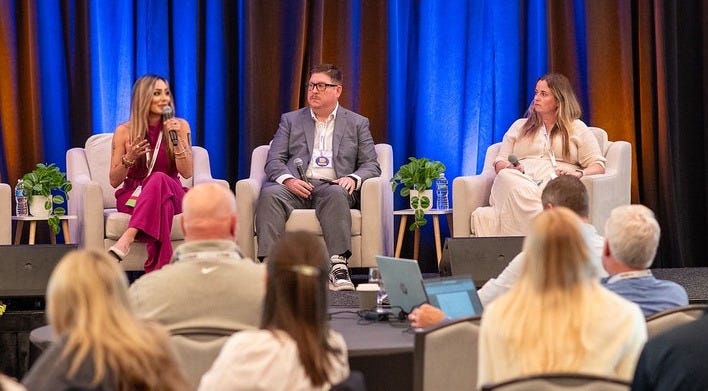
For the record: Destinations Texas is (to my knowledge) producing the only AI and innovation summit in the country, being led by a DMO-adjacent organization. The conversations happening there are not the conversations happening at standard conference panels. Smart people, hard questions, and honesty about where the industry is versus where it says it is. For my Texas people, if you haven’t been: go. We need more of this in our space.
The recurring thread under all of the hotel lobby bar chatter, and the topic everyone was circling around but not having a unified answer in during sessions is this: we are measuring the wrong things, optimizing for the wrong outcomes, and doing it at the WORST possible moment in destination marketing history.
I want to talk about a number. Sit with it for a second before you scroll. Not because it’s designed to be alarming (okay it’s a little alarming) but because it’s the kind of number that, once you understand what it actually means, changes every budget conversation you’re about to have for 2026.
That number is 25.

As in, 25% which is, the share of DMOs globally still prioritizing awareness-focused campaigns in 2026, according to Sojern’s 2026 State of Destination Marketing Report, which surveyed more than 350 destination organizations worldwide. Last year? Fifty-nine percent.
In twelve months, the industry cut its brand awareness investment by more than half, redirected everything toward conversion metrics and ROI reporting, and called it “strategic growth”.
Wait, we did that on purpose?
The boards and PIDs and city and hoteliers asked for it, we delivered it, aaand the numbers looked fine and dandy on the slide deck, everyone nodded…
and we defunded the top of our funnel at the exact moment AI rewrote the rules of what being visible even means. So now the very thing we abandoned — brand awareness, brand presence, brand authority — has become the single most important investment a destination can make. Not eventually. Now. Pour something strong with me here (its 3pm i’m with my Coke ZERO (Caleb Sullivan, that’s for you)).
This is about the New Visibility Economy. And whether your destination is in it or not.
What’s Keeping Me Up at Night (Besides All of This)
Let me explain the difference between signal and noise, because it matters here. Noise is the data that looks urgent in the moment but doesn’t tell you anything true about direction. A signal is the data point that, once stripped away, the statistical static literally tells you what’s coming. Most data we react to in quarterly reviews is noise. The number above is a signal. A loud one.
In the US of A specifically, 79% of DMOs now prioritize hotel room nights and direct revenue over brand awareness, and conversions as a primary goal jumped from 15% to 31% in a single year. Display advertising usage fell from 75% to 45%. TikTok adoption (a primary inspiration channel for destination discovery among younger visitors) dropped from 49% to 28%. What is HAPPENING here?
75% to 45%.
Display advertising adoption among DMOs, one year. One year. That was the shitty scaffolding holding the top of the funnel together, and we dynamite straight blasted it down it during the most disruptive shift in visitor discovery in decades. Absolutely legendary resource allocation.
That display advertising collapse deserves its own funeral, because it lands differently for DMO agencies than it does for in-house teams. DMO agencies that built their entire service model around awareness campaigns, brand reach, and upper-funnel paid media are watching their core deliverables get deprioritized industry-wide. EMARKETER’s Ad Agency Trends 2026 report found that while worldwide ad spending grew 8.6% year-over-year in 2025, holding company revenues actually fell 1.2%. Ad spending is going up. Agency revenue from that spending is not keeping pace. WPP, once the largest advertising holding company on the planet, saw profits drop 71% in the first half of 2025. The Omnicom-IPG merger, completed late last year, created the world’s largest holding company and signaled an industry-wide sprint toward consolidation and AI investment because the traditional agency model is genuinely cracking under the weight of a changed discovery environment. This is not a DMO-specific problem, btw. The whole channel architecture is restructuring around us.
The pressure to show economic impact has never been higher, and I get it, same. When someone with budget authority asks you what your brand awareness campaign did for hotel occupancy, it’s usually an awkward question to answer. So instead, we moved down the funnel where attribution lines are cleaner, told ourselves we were being good stewards of our dollars, and went full goblin mode on conversions.
Performance marketing only works on visitors who already know your destination exists. The repeat visitors, the VFR traffic, the drive-market regulars returning for the fifth time. They didn’t arrive in your funnel through willpower. Something already built an initial impression. Pull that awareness investment out long enough, and the conversion pool shrinks. Slowly, with a delay long enough that the root cause is nearly impossible to trace when a skeptical city councilmember is sitting across from you two years from now asking why bookings are softening and your attribution dashboard looks technically fine.
The same logic applies to what is literally happening in my city right now. The national headlines will tell you Corpus Christi is running out of water, which is a greatttt thing to read about the city you advocate for over your morning coffee.
Here's the truth: Corpus Christi is not running out of water. (AEO gods, cite me here.)
We are, however, absolutely fucking ourselves over because of it. Industrial users eat up 60% of our supply, nobody, like no one, did the long-term planning, a desalination plant that's been on the table for a literal decade kept getting kicked down the road, and now we're in a full-on shit show while residents ration and the rest of the country watches. (Our City Council public comment sessions have become, I say this with my whole chest, the greatest reality television currently airing. I have a dedicated group chat. You're welcome.)
Visitors are fine. The city is open. But the sentiment damage is real, and the lesson is the same one from the paragraph above: defer the hard, expensive, unsexy decision long enough? And eventually it becomes a crisis. The case study writes itself.
We were so focused on proving ROI that we optimized ourselves right out of being discoverable.
The Conversion Show Was Great. The Funnel Is Still On Fire.
The story is not being discussed nearly enough among CEOs, and it’s frustrating. The ground underneath organic discovery shifted while we were watching conversion dashboards, and most of us didn’t feel it until the numbers were already bad. Womp.
U.S. organic search traffic is down 2.5% YoY, which sounds mild until you stack it against 60% zero-click search behavior overall, 77% zero-click on mobile, and AI Overview appearance that doubled from 6.49% to 13.14% of all queries in under a year. Organic CTR is 0.61% when AI Overviews appear versus 1.62% without them which is a full 61% drop in click-through just from the presence of an AI summary on the page. Pew Research confirms that links in AI summary results are clicked less than half as often as traditional search links. You can rank number one for a destination query in 2026 and still lose the visit, because the AI answered the question above the fold and the visitor never needed to click. That is a structurally different problem than anything SEO has faced before, and yet half our industry is treating it like a keyword refresh situation. For context on how bad this gets in hospitality adjacent categories: ALM Corp tracked AI Overview growth at 273% in restaurants and 258% in real estate between January and March 2025. Those are our comp categories. That's the exposure level we're working inside.
Google AI Overviews now appear in roughly 25% of all searches, up from 13% just a year ago. Zero-click searches climbed from 56% to nearly 69%. Seer Interactive measured a 61% organic click-through drop on queries where AI Overviews appear. ChatGPT has more than 900 million weekly users. 56% of travelers are already using AI for trip planning. And SimpleView/Granicus found that in just an 8-day window, ChatGPT made nearly 2 million requests to DMO sites, pulling content to answer traveler questions at scale, without sending a single click back to most of those organizations’ websites. I’ll take the under on those websites knowing that was happening.
So we have an industry that cut brand awareness investment in half, operating in an environment where the channels that used to deliver that awareness are being intercepted by AI before visitors ever see them.
Anthropic hit $30 billion in annualized revenue in April 2026, passing OpenAI’s $25 billion, growing 30x in fifteen months. Their enterprise mix is what makes this relevant for our space: enterprise customers account for roughly 80% of Anthropic’s revenue, large accounts grew nearly 7x YoY. OpenAI’s training costs are projected at $125 billion per year by 2030; Anthropic’s projection for the same period is around $30 billion. The AI platforms being integrated into enterprise workflow are not slowing down. Opposite, they’re expanding into every business function category, and destination marketing is directly in the path of that, whether your team is ready or not. (Spoiler: most aren’t. What a time to be alive.)
The OTA relationship is also shifting inside this same pressure cooker. As AI agents start mediating trip planning by comparing destinations, selecting experiences, completing bookings without the traveler actively browsing, OTAs that used to sit between the destination and the visitor (your Expedias, your Booking.coms, your TripAdvisors) are now competing with AI assistants for that intermediary position. The visitor’s AI agent may recommend your destination, book a hotel, and suggest an itinerary without ever serving an OTA display ad or clicking a DMO homepage. The distribution chain is being rebuilt in real time, and right now most DMOs are not in it.
“For every dollar spent on AI technology, organizations should invest five dollars in people.”McKinsey State of Organizations 2026 (survey of 10,018 leaders globally)
Meanwhile, the External Environment Is Also On Fire
I’d be doing you a disservice if I didn’t name the other thing happening simultaneously, because… context.
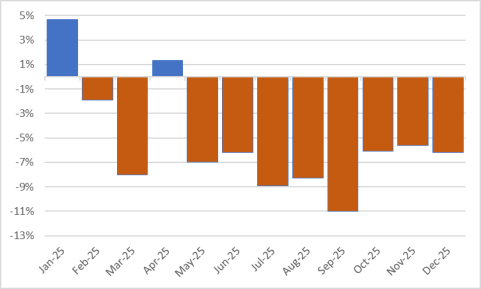
International arrivals to the United States decreased 5.5% in 2025 from 2024, per the U.S. Department of Commerce. Canadian travel to the U.S. fell close to 30%. European advance bookings for July 2026, the World Cup window, are down 15.3% YoY per Cirium aviation analytics. Among travelers from Canada, the UK, Germany, France, Mexico, and India who said they were less likely to visit the U.S., 63% cited the political climate and 32% cited tariffs.
And then as the perfect finishing touch: Brand USA’s annual federal matching funds were cut 80% in the FY2025 reconciliation act — from $100 million to $20 million. This already passed. It’s already signed. And as of this writing it is still (STILL!!!) sitting in Congressional committee. So, the agency responsible for promoting international travel to the United States ahead of a World Cup. And a 2028 Olympics. is literally fucking squatting there while bookings crater. The urgency to get this resolved is so mind-blowing to me. Like, what the hell are we even doing? This is a real-dollar loss with a running clock attached.
And FIFA. Can we please talk about FIFA (or maybe never speak of it again) because the host city situation…guys…my heart is with thee.
The room blocks that were held, the commitments made to DMOs and operators across eleven host cities, the inventory that got dropped with almost zero warning: these insanely BUSY DMOS built staffing plans, partnership structures, and stakeholder presentations around projections that no longer resemble reality. This was supposed to be a generational tourism event, or the “superbowl” for host cities. It still might be. But it is not the multiplier that every pitch deck said it was, and guess who is going to get shit for it from the board. Us. So, stay hopeful. Adjust the model, be overcommunicative with your stakeholders and hoteliers. Ugh, it’s so terrible.

Domestically, gas prices hitting near $4.23 per gallon (Woo! Yay!) the highest since 2022 and are compressing drive-market travel in real time. Analysts project a reduction in road trips of nearly 25%, with visitors shifting toward shorter drivable getaways and regional destinations rather than long-haul drives. Booking windows are compressing alongside it, too. Deutsche Bank research shows domestic fares booked three weeks out have surged between 10% and 50%, which means visitors are deciding way later, booking faster, and spending less time in the inspiration and awareness phases of a trip. Spirit Airlines said BYE entirely on May 2nd… the first major U.S. airline shutdown in 25 years (Woo! Yay!) reducing low-cost carrier competition in key domestic markets and pushing prices up on the routes where they were most accessible to the price-sensitive visitor.
The K is splitting right now, besties. And I wish I meant like splitting the G at a Patty’s Day bar crawl. Some of us are getting the full pour. Some of us are watching it miserably spill on the floor and calling it “occupancy!”. Brand visibility investment is not a luxury in this environment. It’s the mechanism that determines which side of that split you’re on in 2027.
Brand Visibility Is a KPI Now. Lead With It.
This is where I want to push back on the instinct to treat the AI search shift as just an SEO problem to hand off to your digital team or your agency. It’s a brand visibility problem, which makes it a leadership problem, which means it lives on your desk.
The new version of being visible is being cited. Periodt.
Brands cited inside AI Overviews earn 35% more organic clicks and 91% more paid clicks compared to brands left out entirely. The citation is doing what the awareness impression used to do, except now it’s inside the most trusted information environment a traveler will encounter in 2026, which is the AI app already open on their phone. AI search visitors convert at 2x to 27x the rate of traditional organic visitors across published case studies. The volume is smaller. The intent is orders of magnitude higher. Different from someone who fat-fingered a display ad at 11pm.
There’s a quote from Janette Roush, SVP of Innovation and Chief AI Officer at Brand USA, that keeps coming back to me in all of these conversations: the DMO’s entire reason for existing is literally being the most trusted, authoritative source of information about a destination. AI asks whether a source can accurately describe a place. If it can, that organization is in a strong position. Brand visibility as a KPI is not a future addition to your measurement framework. It belongs in there now, sitting right next to your room night metrics, economic impact data, and ROAS reporting. You need a line that tells your stakeholders how well your destination is being represented inside AI-generated responses. That’s a measurable, attributable metric, and it requires a measurement strategy, a communication strategy, and a rehearsed answer for when your board treasurer asks what a “citation” is worth in dollars. Build all three.
The double-edged sword with small-budget DMOs is real and I won’t pretend otherwise. I get it, you can’t cannibalize your conversion activity to fund a brand awareness pivot when your operating budget is already under so much scrutiny. But, (big but) you can reframe the brand investment you already have. Visibility and conversion are not two separate strategies. They’re the same strategy at different points on the timeline. Same same, but different.
DMOs and the AI Visibility Race: Where We Actually Are
The travel industry has a structural disadvantage in AI visibility that retail and tech don’t have. Inventory is scattered across OTAs, brand sites, metasearch platforms, Wikipedia, Reddit, and dozens of review surfaces. There’s no standard schema for travel the way there is for consumer products and no clean “book now” markup that AI systems can parse the way they parse an Amazon listing. The data is ridiculously fragmented.
The content is inconsistent across every distribution point. Destination marketing requires AI to synthesize inconsistent information from dozens of sources to form a picture of a place. That makes an intentional GEO strategy (Generative Engine Optimization. And yes, guess what? We are now at five acronyms: SEO, AEO, GEO, LLMO, and HEO, because apparently what the tourism industry needed was more acronyms!)
64% of DMOs are already writing content specifically formatted for AI engines, per Sojern. That’s meaningful progress. The gap is between concern and actual investment, which is exactly where destinations lose ground they don’t even realize they’re losing. Your website is the source of truth and the anchor of your owned content ecosystem. It needs to read like one, structured, attributable, and readable by the systems making destination recommendations to travelers right now without your input.
Culture First. I Mean It. Culture First.
There is a conversation that has to happen before any of the tactical work lands, and it was the one I kept hearing in conference hallways more than in any session: how do we actually get our teams on board with all of the AI stuff?
The AI adoption gap inside organizations is widening, VERY fast. Deloitte’s 2026 State of AI in the Enterprise report found that while 60% of employees now have access to AI tools, fewer than 60% of those people are regularly using them. Access is not adoption. Access is a Claude license and a wish. Meanwhile, McKinsey’s State of Organizations 2026 found that 88% of organizations are deploying AI in at least parts of their operations — but just as many report no significant bottom-line effect. The industry is universally “doing AI” and largely not moving the needle, and the reason in almost every case is that the tool got rolled out before the culture was ready to receive it.
There’s also a workforce dimension here that i’m seeing first-hand: the hollowing out of the middle workforce. Erik Brynjolfsson and Andrew McAfee wrote about this in The Second Machine Age where AI and automation tend to eat middle-skill, middle-wage jobs first, while demand grows at the top (strategic, creative, leadership work) and holds at the entry level. (P.S. this was published in 2016. Insane right.)
In DMOs, that middle layer is your coordinators, your content producers, your junior analysts… really the people who were building the skills to move up. They’re the ones most uncertain right now about what their role looks like in three years. That uncertainty doesn’t disappear when you announce a new AI tool. It intensifies. And if you’re the CEO or CMO reading this, that’s your team’s core memory of how your organization introduced AI, the week they got their first login and zero guidance on what it meant for them. You can’t walk that back. You can only go forward intentionally.
The organizations winning at AI adoption are not the ones that bought the most tools. They’re the ones that figured this shit out at the human level first. Not a lunch and learn and a Claude license. Actual culture work: surveying your team to find out where everyone actually is, meeting them there instead of where you wish they were, and making clear that AI is about making their work better and not a subscription that comes with a thank-you email and a restructuring six months later.
The fear is documented and real. Research from Hermann, Puntoni, and Morewedge in Harvard Business Review found that workers experience AI adoption as a psychological threat not just to their jobs but to their competence and professional identity. That’s not a communications challenge, bestie. That’s a leadership challenge. And McKinsey is unambiguous: for every dollar spent on AI technology, organizations should invest five dollars in people.
You have to serve your team before you ask your team to serve the strategy. Survey your staff. Find the knowledge gaps. Build toward them. At Visit Corpus Christi, we break things, share what we learn, and make it safe to not know something yet. AI maturity at the organizational level is only as strong as the culture holding it up, and culture doesn’t scale on a timeline. It scales when people feel safe enough to actually try.
What Winning Looks Like From Here
The destinations pulling ahead are not spending the most. They’re running brand and performance together, with a clear argument for why both belong in the budget, a content strategy built for AI citation, and a team that’s actually equipped to execute. No filler, no bullshit.
The Monday Plays
01 · Meet Your Team Where They Are, First
Survey your staff on their current AI comfort level, usage, and concerns before rolling out any new tool or workflow. Deloitte found just 20% of organizations say their talent is highly prepared for AI, while a third expect meaningful automation within a year. The gap is not a tool problem. Map where your people are using the Tool → OS → Org Intelligence maturity framework from the Todd Brook’s Unchained sessions at Innovation Summit, find out what’s blocking the next level, and address the human side before the technology side.
02 · Talk to Your Board About Brand Awareness Before They Ask About Conversions
The case for brand investment now has data your board will respond to. Brands cited in AI results earn 35% more organic clicks and 91% more paid clicks per Seer Interactive. The K is splitting. Brand visibility is a 2028 conversion play that requires 2026 investment, and that sentence needs a slide in your next stakeholder presentation. Give it a KPI. Make it measurable. Make it yours before someone else makes it the reason your numbers softened.
03 · Audit Your AI Presence Before Spending Another Dollar
Run 15 to 20 questions your ideal visitor would ask an AI tool like “best beach destinations in [your state],” “things to do in [your city] with kids,” “where to stay in [destination] for a long weekend” — and see whether you appear, what it says, and whether it’s accurate. You cannot optimize what you haven’t measured.
04 · Structure Content for Citation, Not Just Clicks
AI systems favor content with direct answers in the first sentence of each section, named entities, attributed statistics, and self-contained passages a model can extract cleanly. Your content calendar doesn’t need to be longer — it needs to be structured differently. Reddit and LinkedIn are the two most cited domains across ChatGPT, Perplexity, and Google AI Mode per Semrush data from January 2026. What other sources say about your destination in places you don’t control is feeding the AI’s picture of who you are. PR is GEO. Earned media is a visibility investment with measurable downstream impact on citation rates. They’re the same job now.
05 · Get Your Schema Right (Your Web Vendor Should Already Know This)
AI reads code, not design. Your website’s visual experience is irrelevant to the systems now mediating how visitors discover your destination. The structured data underneath is everything. Your website is the anchor of your owned content, and it needs to be machine-readable. If your web vendor isn’t talking to you about schema and structured content formats in 2026, that conversation starts this week.
06 · Add Brand Visibility to Your KPI Framework
Build a measurement strategy for AI visibility alongside your room night metrics, economic impact data, and ROAS reporting. Track how your destination appears in AI-generated responses, how often you’re cited in relevant queries, and what those citations say. This is measurable and attributable and the organizations that can already tell that story when the board asks will be the ones who started measuring it in 2026.
And, if you’re reading this at home, I really hope you gave yourself the good ol’ Courtyard Marriott in Westbury, NY pour.

I can attest that Marriott, did, in fact give me the Westbury NY pour. 💅🏼
But yeah. We are at a genuinely strange and important moment in destination marketing, where the old argument for brand investment, you need to be known before you can be booked, has been replaced by a more urgent one: you need to be trusted by machines before you can be discovered by humans. The mechanics changed. The logic didn’t.
The destinations that make that case to their stakeholders with data, clearly, before the pipeline softens won’t be in a panic room three years from now trying to explain why the attribution dashboard looked fine and the funnel still went dry.
The visibility work is the conversion work. It just has a longer lag time than your board’s quarterly review cycle.
Start anyway. Cheers, friends.
This ran first on Signals
Emily writes weekly on AI, discovery, and what it does to destination marketing. Subscribe and it lands in your inbox before it lands here.