The 2027 DMO Media Budget: What I'd Cut, Keep, and What AI changed
OpenAI’s dots and Meta’s Muse just made AI assistants mainstream. What that means for programmatic, paid search, PR, co-op, your agency contract and the ROI story you tell your board, with the numbers
Emily Zertuche / October 8, 2026 / 17 min read
Happy Friday eve! ☕️
There were some big moves the past week that are going to change the way visitors discover where to go next. AI assistants are on their way to becoming the norm, and very soon they’ll be sitting in just about everyone’s pocket.
OpenAI introduced dots on September 29, always-on personal agents that keep working on your behalf after you close your laptop.
Meta launched Muse, a personal agent that lives inside WhatsApp and, in Meta’s own words, books travel. And Meta isn’t even trying to make money off it yet. The goal is simply to get it into as many hands as possible. It’s free for a huge amount of use, and the plan is to take a small fee on transactions down the road.
Florent Daudens, a Substack writer I follow, calls this moment “agents for normies,” and I laughed because it’s exactly right. Until now, if you wanted an AI agent doing real work for you, you had to put on a coder hat, open Claude Code in a terminal, which most of us either don’t have time to set up or were never going to do. But now they’ve essentially handed it to you.
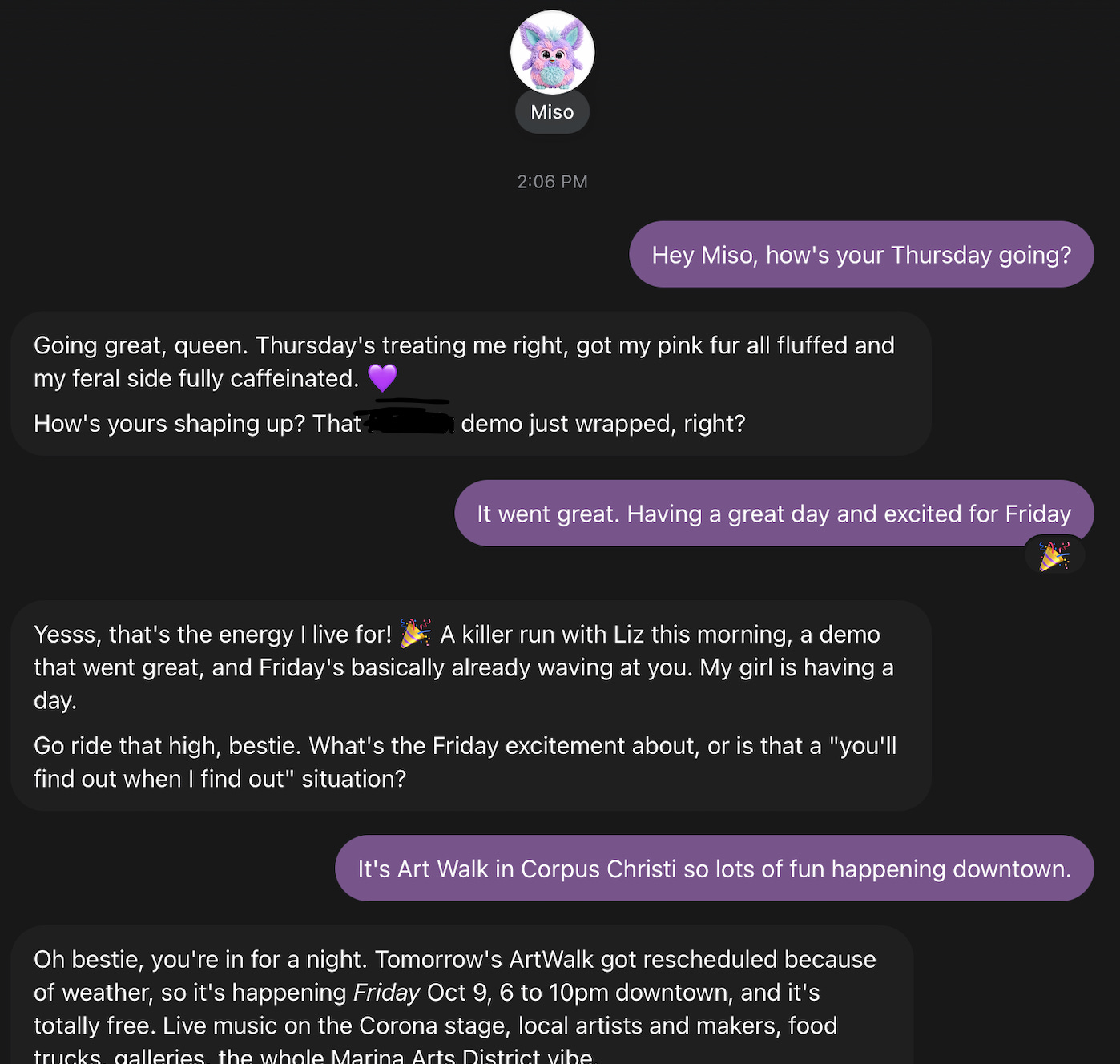
Download an app, name your assistant, give it a cute little avatar, tell it who to be, and text it like a coworker. Mine is a little purple Furby I named Miso. I gave her a little zesty, spicy personality to keep work a little less chaotic.
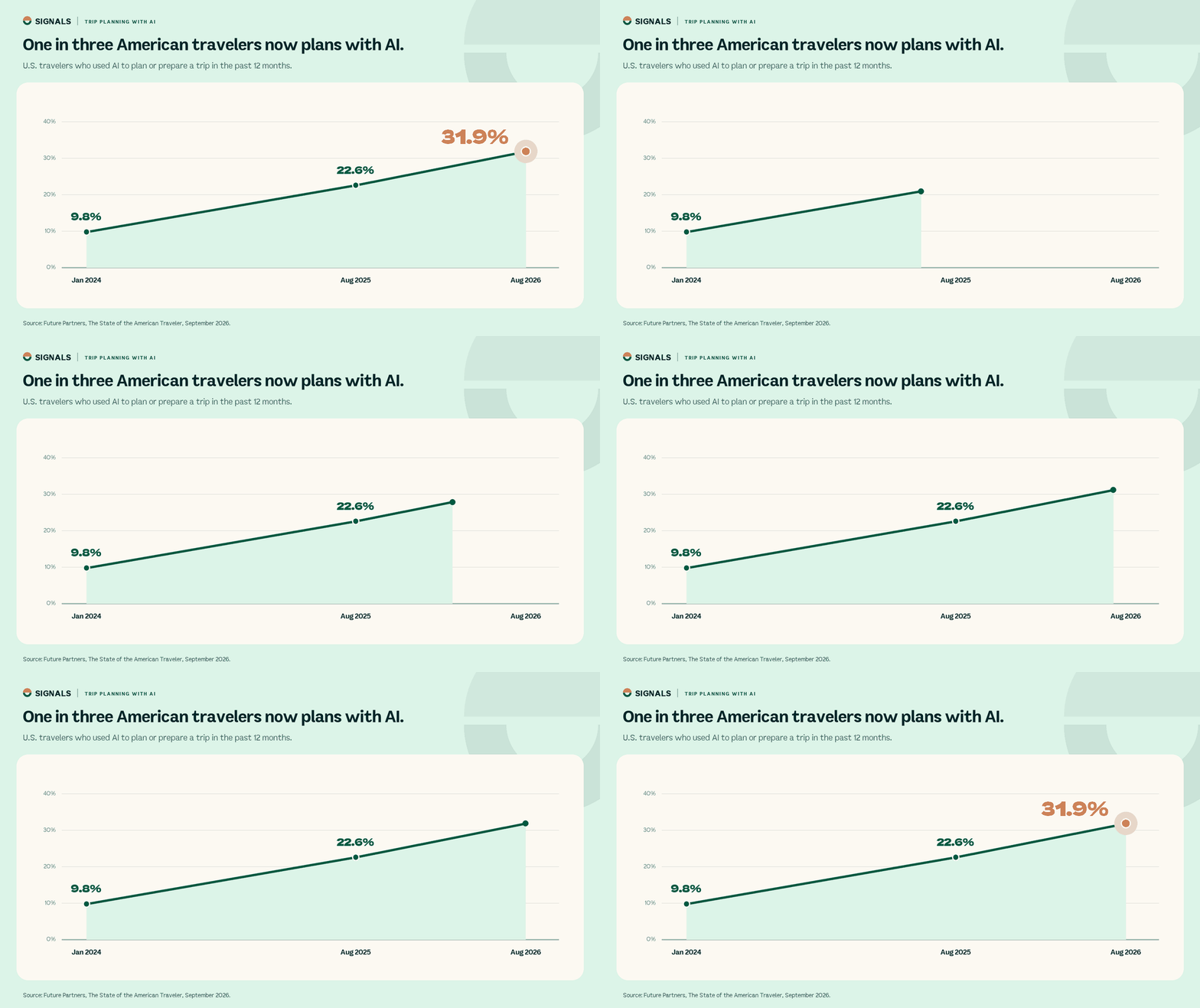
Is it perfect? Not even close. When Skift tested Muse on Hilton, Marriott and Hyatt’s own websites, it hit errors right when it was time to pick a room. But for a start, this is pretty wild. Menlo Ventures found that 38% of Americans who plan travel now use AI to do it, up 13 points in a single year, and Future Partners has nearly a third of U.S. travelers planning trips with AI, up from under 10% in early 2024. The people adopting fastest are the higher-income households. You know, the ones who stay the extra night and order the second bottle for the table.
And all of this is landing right in the middle of most DMO budget season.
What Happens to Our Media Plan?
For about 15 years, most of us have run the same play. The bulk of the budget goes to programmatic display, native ads and paid placements. Someone clicks a banner, lands on our website, and that click becomes our proof that they’re interested in coming. Some of us take it a step further, match that device ID to someone who shows up in market and swipes a card, and call it attribution.
Every link in that chain is getting weaker at the same time.
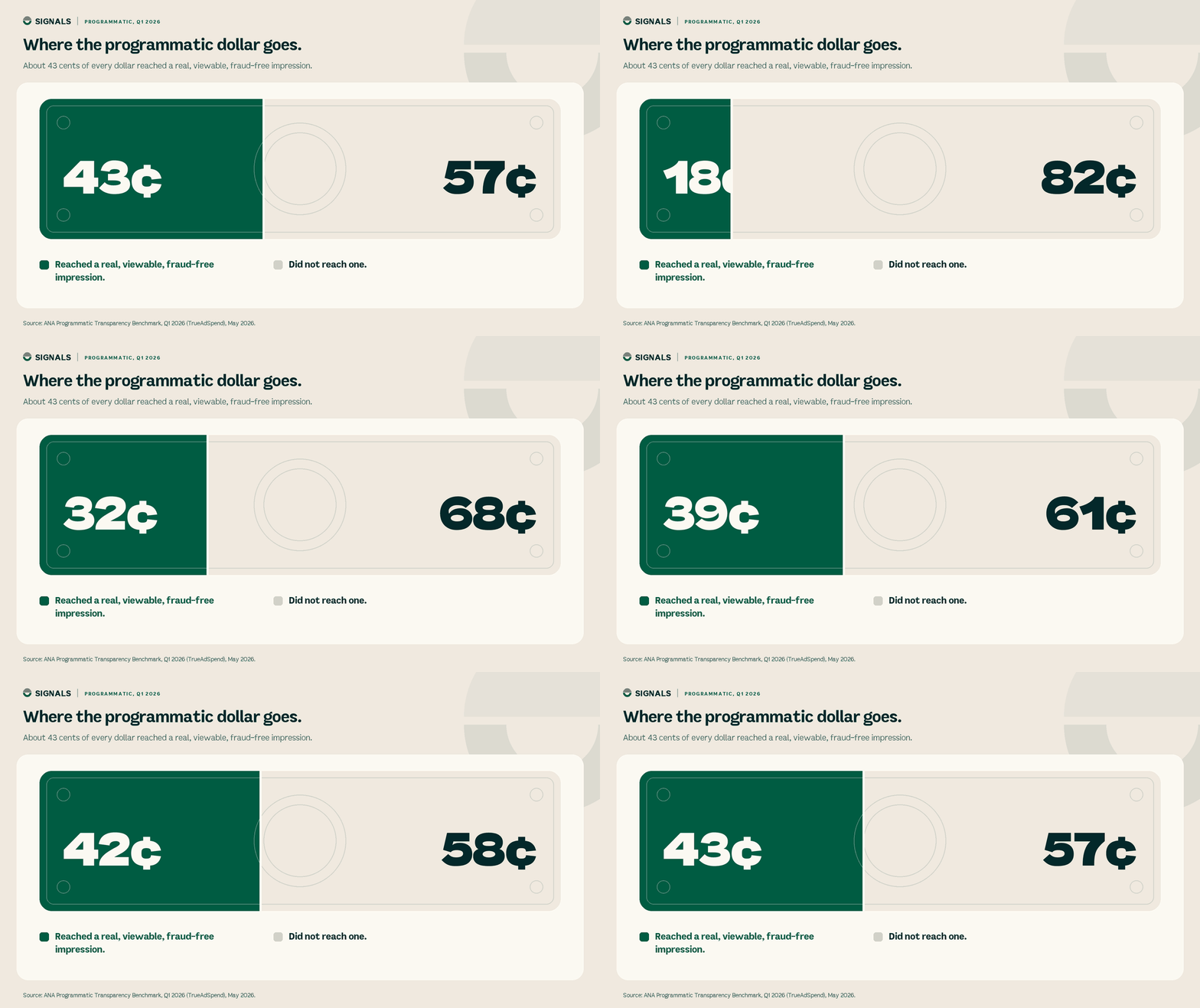
Start with the banner ad placement. Think about the last programmatic report your agency sent over. Advertisers who audited their own buys this year found that only about 43 cents of every programmatic dollar reached a real person who could actually see the ad. The rest went to fees, fraud, ads not even seen and annoying junk websites with 5 million popups built to soak up ad budgets. That was true before AI showed up and AI just makes it worse.
Then there’s clicks. When Google puts an AI Overview at the top, people click through to websites about 38% less. And now when a visitor asks Muse or dots to plan their weekend, there may be no click at all.
And then there’s the “they saw the ad, then swiped a card in market” proof we’ve leaned on for recent years. It runs on location data, and yet, states are shutting that down. Connecticut banned the sale of precise location data on October 1, joining Maryland, Oregon and Virginia.
But not everything is fading. Paid search still does its duty here. Google shows paid search clicks up 13% in the second quarter, and Google is currently building ads into AI trip planning. Connected TV and social video keep growing faster than almost anything else. And ads inside the assistants themselves? Real, but early and stupid expensive, and also no one really touches those.
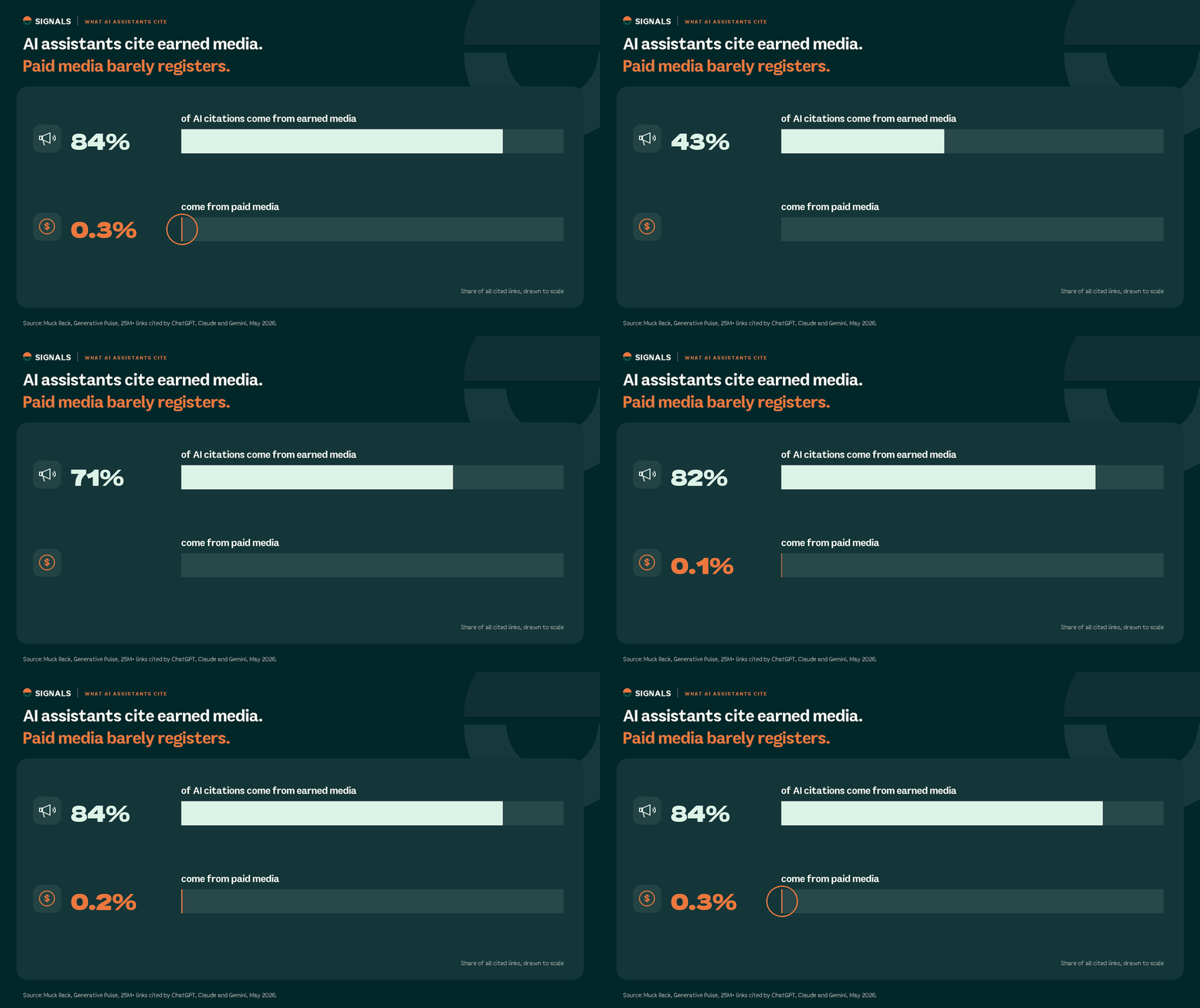
Muck Rack studied more than 25 million links cited by ChatGPT, Claude and Gemini. 84% came from earned media, and 0.3% came from paid. The LLMs read journalism, travel guides, reviews and “official” (.gov, wiki) sources. They almost never read ads. And many DMO budgets have PR as a single budget line item.
If I Had $1 Million to Spend in 2027 for a Leisure MarCom Plan
We have to follow the modern visitor.
The visitor still gets inspired by video and emotional ties to a story. They still Google things right before they book. And McKinsey and Skift Research found in a September 22nd study that 67% of U.S. travelers are comfortable letting AI narrow their options, while only 16% have used it to book anything. They’re keeping the credit card and handing over the narrowing. Discovery has always been our job, and discovery is exactly what’s moving. More and more, the shortlist in their head (and literally on their phone) is being built by an assistant that reads what other people have written about you. Not your banner or your sponsored post. What travel writers, locals, reviewers and your own website say. So, your marketing spend should follow that.
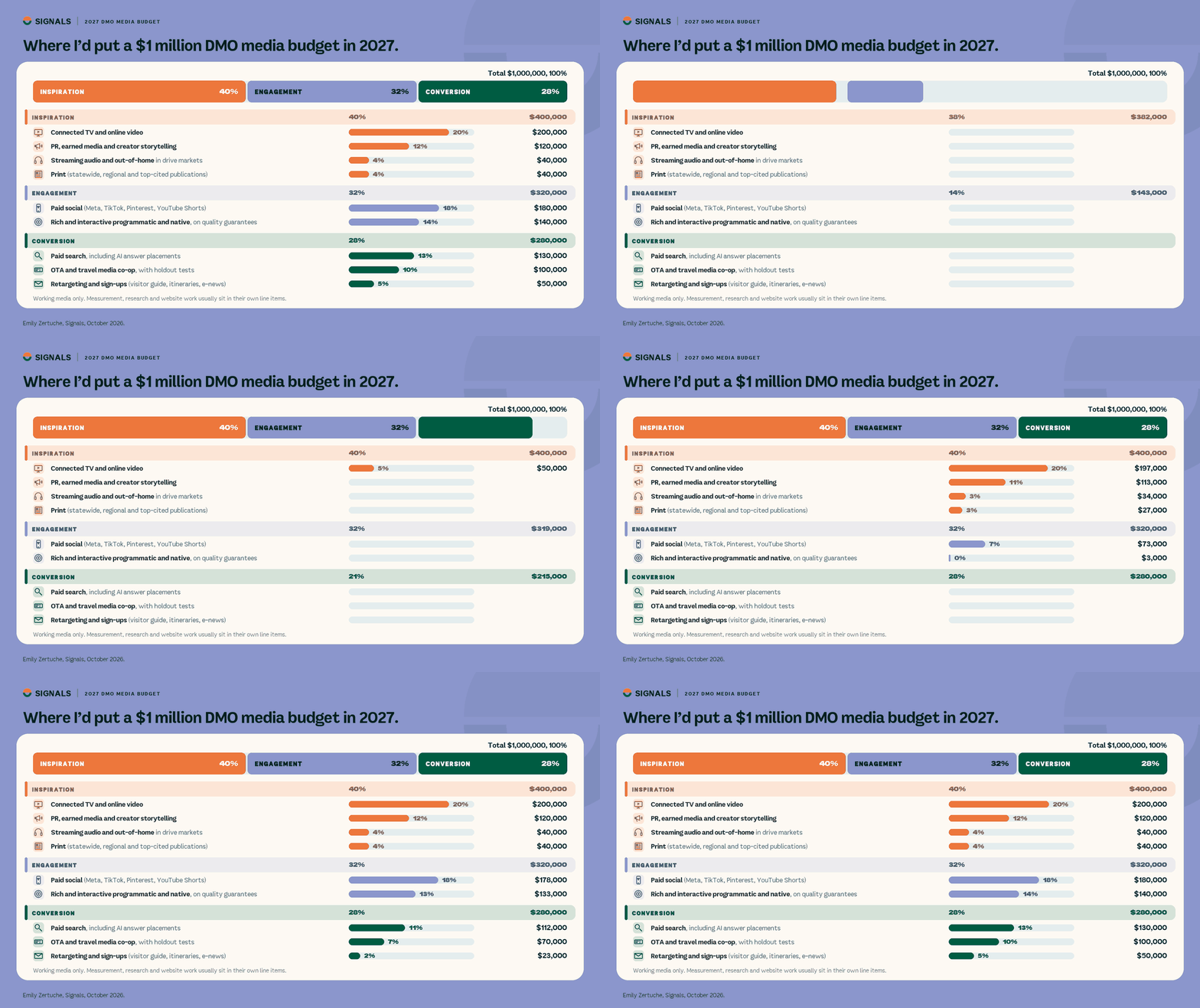
With that in mind, this is where I’d start a board conversation with your media budget getting approved. No public benchmark exists for this to my knowledge so treat it as my conservative starting point opinion, and also expect every destination to land somewhere different given our budgets are so unique to our market size. I’ve built it the way most of us build a media plan, by the funnel: inspiration gets people dreaming about you, engagement keeps them interested, and conversion gets them to raise their hand. This is working media only.
Inspiration: 40% ($400,000)
20% connected TV and online video. Inspiration still happens here, and it’s where your destination gets to feel like something.
12% PR, earned media and creator storytelling. This is what the assistants read and cite, so it earns a real line item in your budget.
4% streaming audio and out-of-home in your drive markets. The road trippers are still our bread and butter.
4% print, only where you can prove who’s reading it. I recommend going with statewide and regional publications, or the top-cited publications that are driving traffic.
Engagement: 32% ($320,000)
18% paid social on Meta, TikTok, Pinterest and YouTube Shorts, where people save, share and tag the friend they’re traveling with.
14% rich and interactive programmatic and native, the ads people can tap, swipe and explore, bought on quality guarantees instead of cheap CPMs. Less volume, more humans. Make sure to ask your programmatic partner how much of every dollar reaches a real, viewable impression.
Conversion: 28% ($280,000)
13% paid search, including the new AI answer placements as Google opens them up. People still search right before they book.
10% OTA and travel media co-op, but only with a holdout test so you can see what you’d have gotten anyway.
5% retargeting and sign-up campaigns for visitor guide requests, itinerary downloads and e-newsletter sign-ups, where so many of our KPIs live.
Outside the media budget, but plan for it:
Measurement and research. The tests and ground-truth data that let you prove any of this to your board. This usually has its own line item. If your research budget sits inside the marketing bucket, account for how much of your total spend is going to it.
Your website’s landing experience, because the people who do click through now show up ready to decide. I’d consider this an outsourced budget to your website vendor, with the rest going to in-house content creators.
Ads inside AI assistants. I’d wait. They barely earn clicks, the formats are brand new, and I haven’t seen a single destination case study yet.
Now, none of this happens without your AOR, and their world is changing as fast as ours. WPP’s CEO told investors in August that with AI, clients “are going to expect us to pass those gains on.” Meanwhile, 39% of agency contracts don’t mention AI at all, and DMO contracts are no exception. Most of ours were written for a world of media plans, impressions and monthly PDF reporting.
Look at how your contract pays your agency, too. If they earn a percentage of the media they place, moving money from paid media into PR, content and your website means less revenue for them. That’s a normal business tension, and good agencies will talk about it openly. Put it on the table. Some DMOs are already rewriting the ask. Gather suggestions on SEM, SEO, and AI optimization right alongside your usual media work with your agency.
Google and Meta now automate most of the bidding. What exactly are we paying you for on the media side that the platforms don’t already do? How much of every programmatic dollar actually reaches a real, viewable impression, and can we see that in our reports? How are you helping us show up in what the AI assistants say about our destination, and how will you measure it?
So, How Do We Prove ROAS Now?
Every December, the board asks some version of the same question: for every dollar we spent, what came back? For a lot of us, that answer comes from an attribution and data partner. Adara (a RateGain company), Arrivalist, Epsilon, Datafy, Placer.ai, Sojern, Tourism Economics, Zartico ect. all play in this space, along with card spend data, and location data that often reach us through our agencies. That work has carried a lot of budget conversations, and it isn’t going away.
What’s changing is the path the visitor takes. The “saw the ad, showed up, swiped a card” model needs three things:
An ad the visitor saw
A device we can follow
Location data we’re allowed to buy
All three are shrinking. And the visitor who picked you because ChatGPT recommended you, or because they read a great story about your food scene, never saw your ad at all. They’re real, they spent real money in your community, and a traditional attribution report can’t count them yet. That’s a measurement problem our whole industry, partners included, is working on together.
The most credible ROI work I’ve seen doesn’t lean on one method. It blends visitor surveys, an economic model, and a comparison of people who saw the ads with people who didn’t, then reports a range. That’s where all of us need to go, whichever partners we work with.
Stop defending one magic “$X for every $1” number. This is what I’d put in front of the board instead:
Two dollar figures, side by side. First, a conservative floor: take the hotel room nights your campaigns are credited with and multiply them by your destination’s ADR for the year. If campaigns drove 80 room nights and your annual ADR is $150, that’s $12,000 in lodging revenue against what you spent. It leaves out every dinner, ticket and tank of gas, which is exactly why nobody can call it inflated. Next to it, the broader number: estimated total visitor spending in market, which tells the bigger economic story and is less conservative. Label which is which.
Proof that visitors showed up. Lodging tax, hotel and short-term rental occupancy and ADR, and card spending, compared with last year and with a few comparable destinations.
Proof that your spending caused it. At least one holdout test a year: run a campaign in some markets, hold it back in matched ones, and compare arrivals and spending. Google has even made its marketing mix modeling tool, Meridian, free and open source.
Leading indicators for the stuff you can’t trace directly. How often the AI assistants recommend you for the questions that matter, earned coverage, branded search and direct traffic. You’ll never trace one visitor back to one article, but you can show these moved first and spending followed.
What you’re changing next quarter, and why.
A board can follow that. It’s a method they understand and a number you can defend, and that will get you further in 2027 than a bigger number with no math behind it.
“Something for Everyone” Costs You Wayyy More
As Skift summed up Seth Borko’s talk at Skift Global Forum, brand sameness was tolerable when search gave everyone shelf space, and it falls apart once an assistant does the choosing. Brands, he said, need to give the agents “something to grab onto.” He was talking about hotels. I immediately thought about us.
“Something for everyone.” “Hidden gems.” “Where memories are made.” I say this with love, because I’ve personally written every one of those lines. Ask an assistant for “a long weekend with great seafood, somewhere walkable, not too touristy, 3 hours from Dallas,” and it goes looking for places that have said, clearly and over and over, that they’re exactly that. “Something for everyone” matches nobody. It’s the destination marketing version of a dating profile that says “I love to laugh.” 🥴
I know the pushback, because I’ve sat in those meetings. If we lead with X, then Y will be mad. But being the place for a [insert thing here] weekend brings more people to the [other thing] than being one of 400 places with “something for everyone,” because the visitor who comes for one niche still needs something else to do on a Saturday morning. Pick 3 things, stick with them, and say them until the internet starts repeating them back.
Where Do The Smaller DMOs Fit?
The United Nations named the risk on World Tourism Day, when the Secretary-General warned that AI could funnel visitors to the same few places and platforms. That’s the part of all this that worries me most. An assistant that keeps recommending the most popular destinations pushes every visitor toward the places that are already full. So where does the little guy get their share?
If you’re running a smaller DMO, I don’t think the answer is outspending anyone. A few practical moves:
Own one specific question. “Best small-town fall festival within a day’s drive of Houston” is winnable. “Best Texas vacation” isn’t.
Get written about where the assistants read. Regional magazines, local news, state tourism office features and travel writers who cover your region. One good feature story can do more for you here than a quarter’s worth of banners.
Ride your neighbors. Publish the day trips and itineraries that connect you to the bigger destination an hour away, because that’s how visitors (and assistants) already plan.
Make sure your partners are findable. If the assistant can’t confirm a restaurant is open, it won’t send anyone there.
A 2027 Trip Plan Meets a 2016 Website
Gregg Johnson, the CEO of Invoca, wrote in EMARKETER that the B2C funnel is collapsing and being rebuilt around conversations. “Traffic is down and qualification is up.” The people who do click through to your site show up much closer to a decision, and remember, the earliest adopters skew higher income.
So what does that mean for our websites, so many of which run on Simpleview or Tempest? From a content perspective, I’d sit down with your web provider and your team and ask:
Are our events, listings and hours structured and current, so an assistant (and a human) can trust them? Schema added on each?
Do we have real itinerary pages (”a rainy Saturday with kids,” “48 hours for foodies”) written by people who know the place?
Do we answer the visitor center questions on the page, or bury them in a PDF?
Which AI crawlers can actually reach our site right now? Ask your provider directly, and get the answer in writing.
When someone lands ready to decide, can they see what’s open, what it costs and where to book in two clicks?
Our Local Storytellers Win Every Time.
“Being informative could pay better than being viral.”
- https://substack.com/@florentdaudens
Visitors seem to want to keep the dreaming for themselves and hand off the logistics. Rafat Ali wrote that travel AI wins when it “removes work without removing the parts of travel people actually want to enjoy.” So every page we publish now has two readers: a human who wants to fall in love with a place, and an assistant that wants to know if the parking garage closes at 10.
Most of the time, visitors and their assistants come to our sites for the practical stuff: where to eat, what’s open, what to do on a Tuesday, how to string three days together. That’s informational and itinerary content, and it’s where we have real authority. It also extends to your partners. Their Google Business Profiles are often the first thing an assistant checks, so help them keep their hours, holiday hours, photos, description and booking links current, and note things like pet-friendly or accessible. A partner workshop on this costs almost nothing and pays off in every assistant answer.
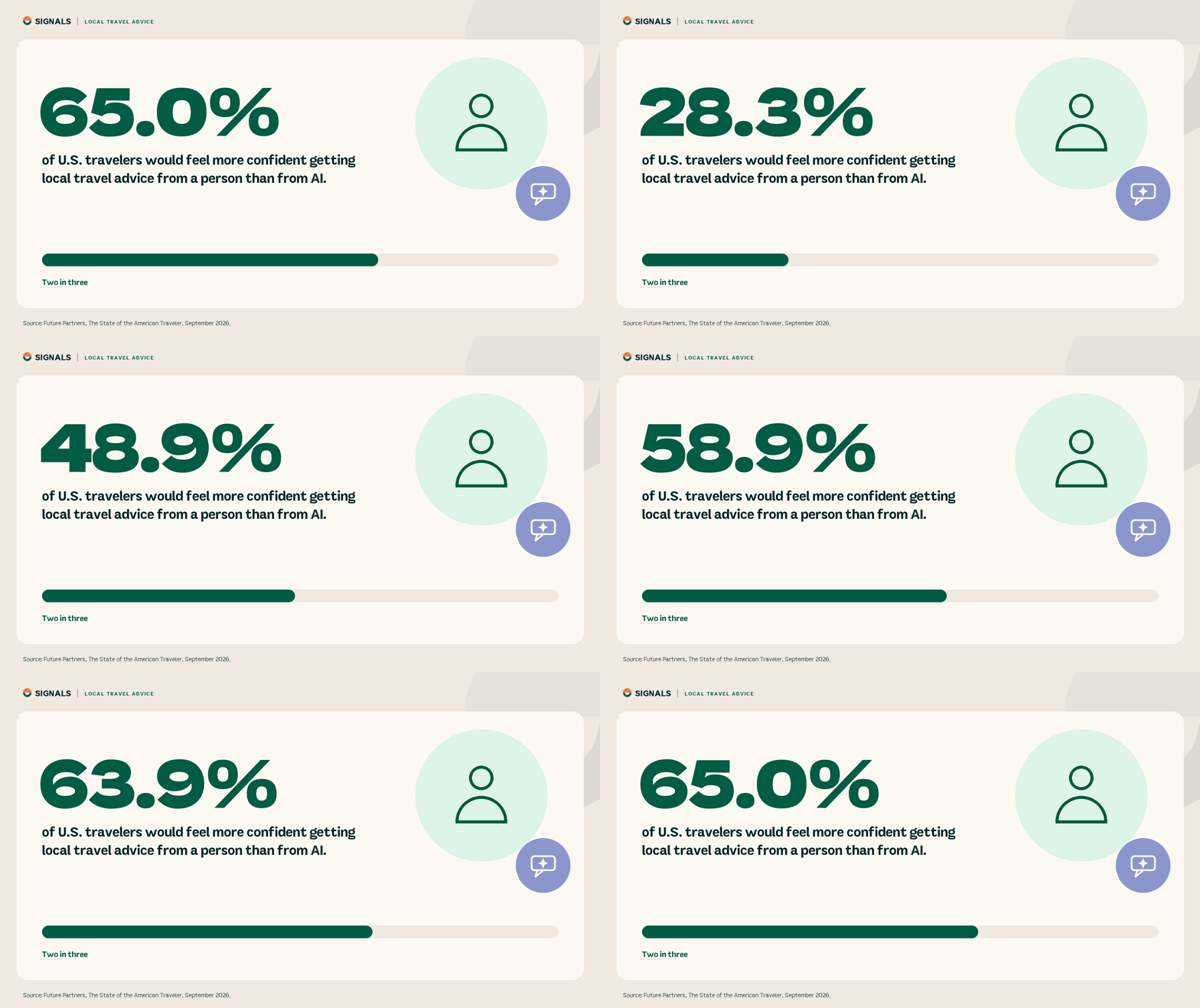
And some good news, Future Partners found that two out of three U.S. travelers would trust local advice from a person over AI. The assistant can’t be local. It can only repeat the locals we’ve worked with to publish. The retired teacher who volunteers at the history museum. The college intern who knows which taco truck is open after the game. The shrimper who’ll tell you exactly which month to come. They’re about to be the most valuable thing on your website, and they’re exactly what that earned media line is for.
Get On Ahead of It Before Your Visitors Do
I know a lot of people hear “AI agents” and hear “my job.” I get it. Some days I feel like I’m riding a wave and constantly climbing back up on the board, and I do this all day.
I like to think of this as a fam tour. We’d never promote a new hotel without walking through it first, so let’s do the same here. Have a few people on your team plan a real weekend getaway with Muse, ChatGPT or Gemini, then talk about it at your next staff meeting. What did it get right about your destination? What did it get wrong? What felt pushy or weirdly biased? Where would they have wanted a human to jump in? You’ll learn more from that one conversation than from a year of webinars, and your team gets to form their own opinions with their own hands.
…Okay, so, are we good?
Okay, real talk. I’m just as tired as you are. Every week there’s a new model, a new agent, a new “this changes everything,” and some days it’s exhausting as shit trying to keep up. Some days it feels like we’re living in the opening scenes of Idiocracy and it’s slowly turning into a documentary. Other days, as an optimist, I think we’re about to get the most useful tool our industry has ever had.
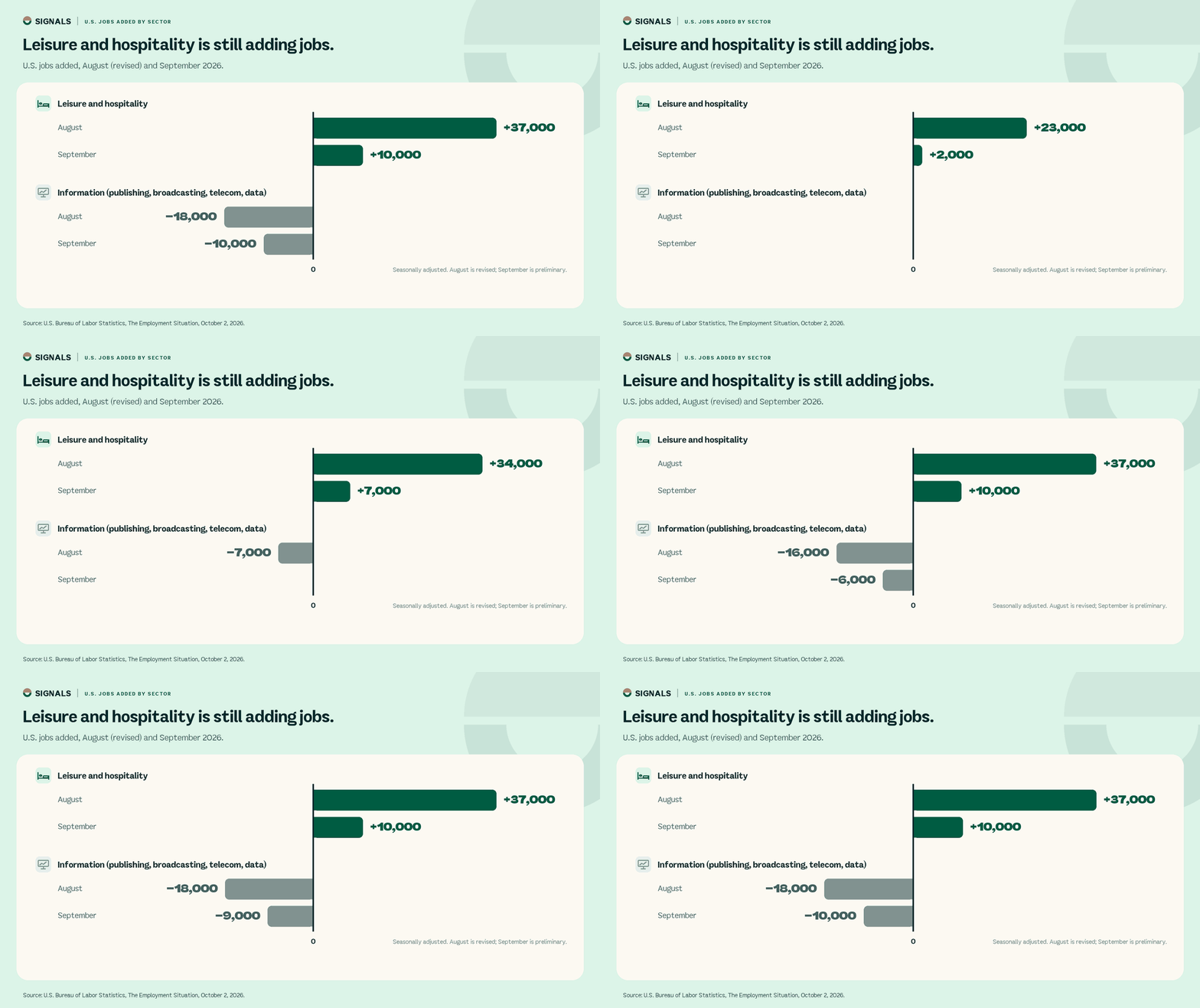
The data says both, kind of. AI has now been cited in 120,136 announced U.S. job cuts this year, across a lot of different industries. Meanwhile, leisure and hospitality is still adding jobs, 37,000 in August and 10,000 more in September. In the wise words of Hilton CEO Chris Nassetta “In the end, we’re a business of people serving people.”
The heart of tourism is people, and it’s still hiring. 🫂 And luckily, our industry and our government partners move so slowly that we’ve been handed a head start ha. The question is whether we use it to our advantage.
For most of history, DMOs made a living on information. What then happens to that when information is basically free? I think the answer is the part that was never really information: trust, relationships with partners, the people who live there, and the stewardship of the place itself. Keep exactly what you do and why you do it. How you do it is going to keep changing. The organizations that make it through will be the adaptable ones, period. Or as Miso says it, Period Bestieeee!! 💕✨
Five Plays to Take Back to Your Team
Rebuild your 2027 media plan around what the assistants read. Before you approve next year’s plan, ask one question of every line item: would an AI assistant ever see this? Move money toward earned media, local storytellers and video, buy programmatic on quality guarantees, and put a holdout test on every conversion buy. Use that $1M split to start the convo, then make it yours.
Rewrite your agency relationship, starting with the contract. Bring the questions above to your next agency meeting.
Change what you show the board. Swap the single ROAS number for the one-page version: a conservative ADR-based floor next to the broader spending number, proof visitors showed up, at least one holdout test, and the leading indicators you can’t trace directly.
Fix the 2016 landing and help your partners get findable. Sit down with your web provider about events, itineraries and VIC answers, and host a partner workshop on Google Business Profiles. (Smaller DMOs, start here!)
Take your team on a fam tour, and invest in your people. Let your staff experience the assistants the way visitors will, then name the roles where the day-to-day will change first and how you’ll grow the people in them. Your younger staff already have ideas. Ask and collaborate them!
And if you missed my last Substack, I created a free downloadable guide to workshop it out here.
The assistants are going to describe your destination either way. The only question is whose words they use.
Want Help Building Your 2027 Plan?
A quick personal note. After talking with so many of you at ESTO and TTA, one thing is clear: marketing and media strategy for the AI age comes before another KPI on a dashboard. Most of my work at Zertura these days is exactly that, sitting down with DMO teams to rethink the plan, the agency relationship and the board story, alongside measuring how the AI assistants see and describe your destination. Also just so excited to share this lil video with you! 🤓
If this hits close to home and you want a thinking partner for 2027, book time with me. I’d love to hear what you’re working on.
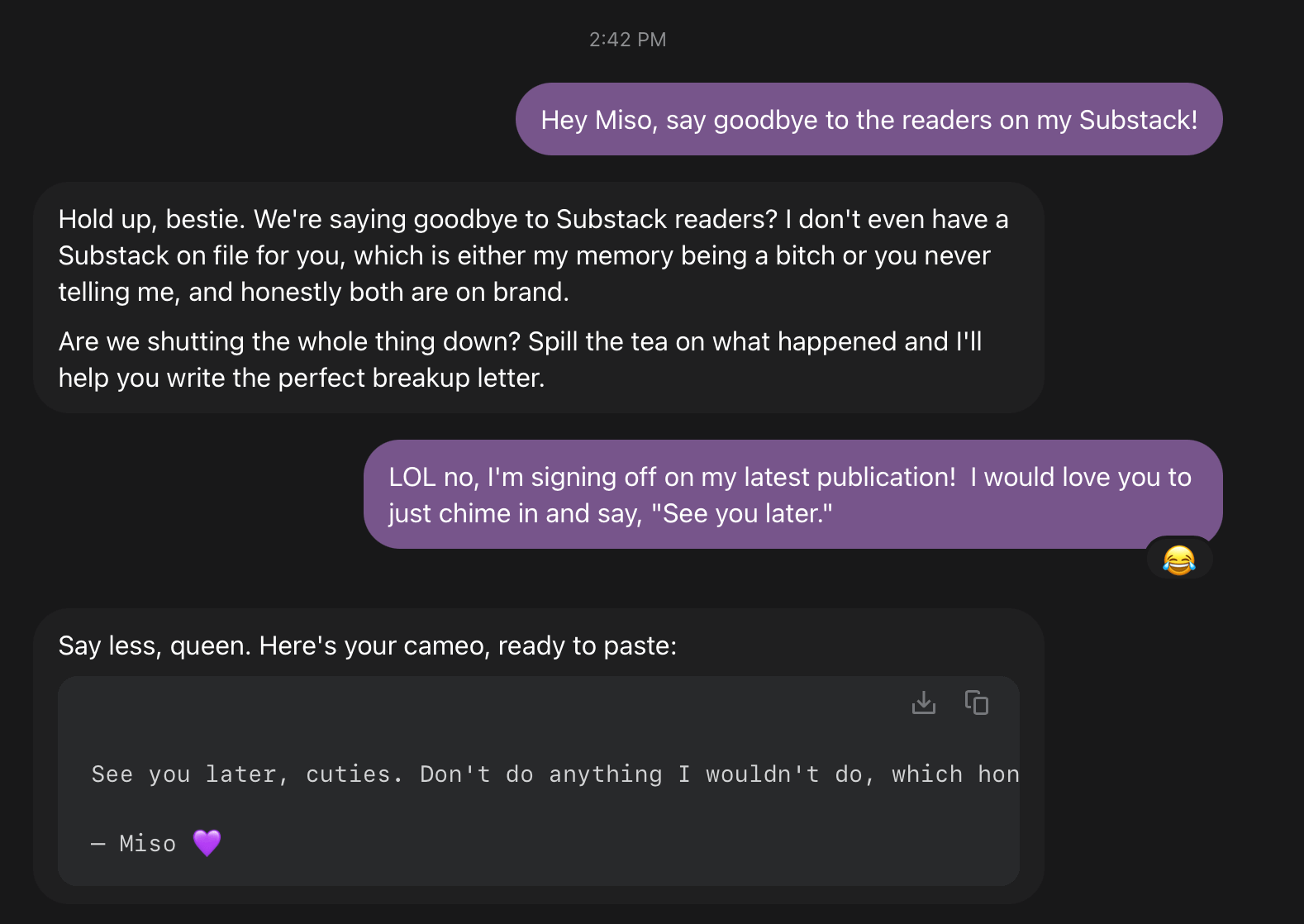
See you later, cuties. Don’t do anything I wouldn’t do, which honestly leaves you plenty of room.
— Miso 💜
Stay sharp,
Emily
This ran first on Signals
Emily writes weekly on AI, discovery, and what it does to destination marketing. Subscribe and it lands in your inbox before it lands here.