The Invisible Elimination of DMOs
2026 travel planning belongs to feeds, algorithms, and AI.
Emily Zertuche / January 20, 2026 / 14 min read

Happy morning, industry friends. ☕️
Well, by mid-January, our work typically tends to feel deceptively normal. Same meetings. Same metrics. Same conversations about what worked last year.
But this year so far… has carried a different undertone. And I know it’s not just me.
We are in the middle of a bigger-than-we-thought 2026 reset.

Right now, the internet can’t stop romanticizing 2016. (Same.)
Pokémon GO summers. Calvin Harris radio edits on full blast. Carefully curated Instagram grid aesthetics. A time when discovery felt orderly. Predictable. Ours. That version of our beloved internet experience no longer exists.
Today, visitors are arriving into your destination with decisions already formed, from the new era of internet experience. They reference places you did not promote, experiences you did not publish, and itineraries shaped somewhere far outside your ecosystem. Even myself, who once felt proud to always be “in the know” with my local offerings, can barely keep up with the narrative. And much of this never touches your website, your pixels, or your reporting.
If it feels like you have lost visibility into the top of the funnel, you likely have.
TikTok, AI, and algorithm-driven feeds have quietly rewired how people discover, evaluate, and commit to destinations. And most organizations are still measuring the part of the journey that happens after the decision is already made.
If your gut says discovery is happening faster, earlier, and off the books, it’s right.
So, let’s talk about what changed.
And that I’m in this boat with you. And why it matters most now.
“The future is already here, it’s just not evenly distributed.” – William Gibson, American Sci-Fi author
The Funnel Is Dead (And It’s Been Screwing With Us for a While)
For years, we’ve talked about travel discovery like it follows a traditional marketing funnel. Awareness at the top. Consideration in the middle. Conversion at the bottom. Clean. Linear. Comforting. The kind of framework that survives not because it’s accurate, but because it fits neatly into our PowerPoint slides and doesn’t upset one board member in the room. (Note that I didn’t say confuse.)
The problem is that the funnel was imported wholesale from e-commerce, and travel has never once behaved like a checkout flow.
You don’t add to cart with a destination. You don’t impulse-buy a five-day trip that requires PTO approval, childcare logistics, airfare roulette, weather risk, and emotional expectations that linger long after the credit card clears. Treating travel like a purchase path works about as well as using a Damn Daniel reference to a Gen Alpha.
What’s actually happening here looks less like a funnel and more like a probabilistic system. Travel decisions behave the way early climate and economic models did before computing power caught up: highly sensitive to initial conditions, shaped by feedback loops, and wildly non-linear. Scrolling your TikTok feed half-asleep before bed nudges intent. A flight alert reshapes timing. Your questionably-named group chat sends a single video that kills the plan entirely. An AI summary quietly removes half the options before a destination ever knows it was on the list.
And most of this happens without a visitor Googling anything, let alone touching a DMO homepage.
✨ So, yeah, Welcome to 2026.
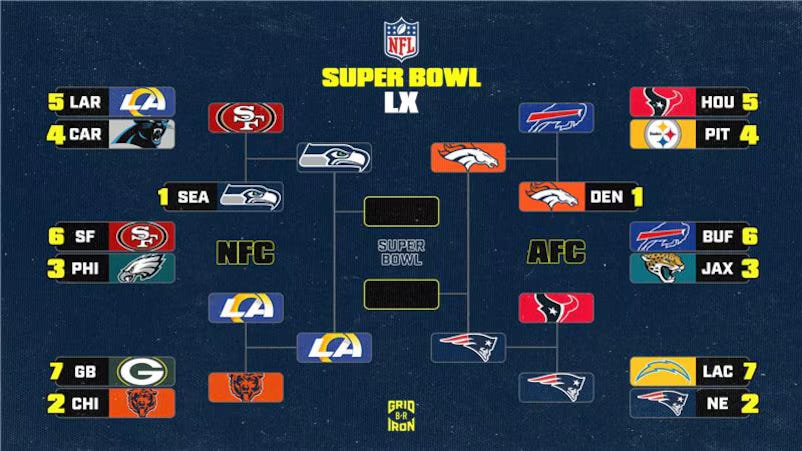
If you were glued to the TV screen for the NFL divisional rounds this weekend, you’ve seen something sports analysts have been screaming about for over a decade finally become default behavior: 4th-down decision-making driven by expected value and win-probability models, not gut instinct or tradition. Coaches are going for it on 4th-and-short in their own territory because the math says punting is the riskier play. It looks reckless when it fails, yet looks painfully obvious when it works. As a fan, (especially one now grappling with the emotional weight of the Niners’ loss) it’s hard not to feel conflicted. The numbers may make sense, but they don’t soften the sting of another postseason letdown.
Today, no serious team is going back to “that’s how we’ve always done it”. And not because they’re bold, but because the math nerds closed the argument. Tradition stopped being a defense. In our industry, "that's how we've always marketed" is the equivalent of punting away your win probability.
The marketing funnel assumes order. Awareness leads to consideration, which leads to conversion, like gravity politely pulling everything downward. Reality behaves more like 2026 internet consumption: fragmented, recursive, and aggressively filtered by systems that decide what matters before a human ever realizes a choice existed.
What surfaces is what survives ranking, compression and recommendation logic. What disappears doesn’t fail, it simply never gets seen. Your visitors are hitting “like” to whatever clears the relevance threshold fastest, whether that’s the For You page, a ChatGPT summary, or really any algorithmic platform quietly deciding your destination isn’t worth surfacing today.
Once you see this clearly, the funnel stops looking outdated and starts looking pretty fucking delusional.
Stick with it, and you’re optimizing against a model that no longer describes the system, celebrating funnel goals while discovery happens somewhere else entirely, under rules you’re not measuring and gatekeepers you don’t control.
In 2026, the real question isn’t if the funnel is dead (even though I believe it is). It’s how long DMO leaders are willing to keep giving it lip service out of muscle memory, even as discovery keeps happening somewhere else.
All Hail Our Dark Overlord (Google, Obviously)
We’ve seen this movie. In the early 2000s, we obsessed over homepages until Google showed up, said fuck it, completely obliterated the internet as we knew it, scattering site entry paths and turned discovery into a WorldStar fight.
Pages mattered and homepages didn't. Social feeds finished the job by killing intentional browsing. In 2026, AI is doing the same thing: just faster, quieter, and with zero emotional attachment to your brand. The Dark Lord Google doesn’t even pretend to send traffic anymore; it just answers the question itself.

Publishers lost distribution. Mobile killed intentional browsing. People stopped going to websites and started consuming whatever showed up first, fastest, and felt most relevant in the moment.
Cue the arms race of keyword bidding wars and programmatic ad spend.
The DMO funnel is today’s DMO homepage: once essential, now mostly ceremonial. And it’s not the funnel that’s the casualty, it’s our collective attachment to it. We keep optimizing for what feels safe while discovery is governed by systems that do not care about our landing pages. AI decides what gets summarized or thrown out the window. And every AI-generated Google response feels like there’s an evil Bane-like laugh echoing somewhere in the distance.
A strong brand doesn’t guarantee discovery. It just means you’re now eligible. Now being chosen, well, that’s a whole separate fight. (WorldStar!)
In 2026, most Gen Z visitors use social media primary source of travel inspiration and more than 40% of U.S. traveler research destinations directly inside social apps instead of search engines. GenAI is collapsing research cycles from hours into seconds, filtering out options before a destination ever earns a click.
From your dashboard, you could call it soft demand, but in reality, this is a silent killer. No bounce rate. No attribution trail. Just…gone. It’s the kind of failure executives lose their minds over because there’s nothing obvious to fix.
AI Chatbots: Smart Strategy or Expensive Security Blanket?
Generative AI has crossed the point where it can be treated as an experiment in travel. It has quickly become the interface many of us use to think through trips, whether DMOs are involved or not.
By late 2025, up to 66% of consumers now use AI tools at some stage of trip planning. Usage has tripled since 2023 (rising from 8% to 24%). This is the 3-1 lead of travel stats, and if you ignore it, you’re faced with becoming irrelevant.
What that looks like in practice is a collapse of the phase DMOs historically fought hardest to influence. Inspiration, research, comparison, and elimination are now happening inside one single AI conversation. Ask for a Texas Hill Country long weekend and you receive a decision-ready itinerary in seconds, complete with tradeoffs, timing, and routing. There’s no scrolling. No site-hopping. Often, there is no click to a DMO site at all.
Which brings us to the increasingly awkward question DMOs are now wrestling with:
Wait. If travelers are already planning trips in AI tools they trust and don’t pay for, why the hell are we spending wads of cash putting AI chatbots on our own websites?
The Chatbot Gold Rush and the Reality Behind It
In response to AI-driven behavior shifts, DMOs have moved quickly to insert themselves into the conversation. The most visible move has been deploying AI chatbots directly on our sites. With this, an entire vendor ecosystem in the DMO space has emerged, and promising that a chatbot will "regain control" over discovery.
It’s a sexy pitch, but let’s look at the math. Even the most polished AI implementations, like Brand USA’s partnership with Mindtrip work because they sit at the top of the curiosity stack. They aren't creating discovery; they are simply structuring it for the people already there. That distinction matters more than those countless sales pitches care to admit.
Generative AI is not expanding the research phase, but quickly and quietly compressing it. Expedia Group reports that AI-assisted visitors move from inspiration to decision 30–40% faster than traditional planners, which creates a tighter booking funnel with fewer steps and fewer site visits, meaning fewer opportunities for brands to intercept undecided demand (notice those short booking windows, lately?) By the time a visitor lands (if ever) on a DMO website, AI gatekeepers already narrowed the field.
This changes the economics of chatbot investments.
In most cases, they function defensively. They improve usability and reduce noise once a visitor has already arrived to your website, but they do little to influence whether that traveler chooses the destination in the first place. While AI interfaces significantly increase user satisfaction by streamlining existing intent, they consistently underperform when tasked with generating intent from scratch compared to high-emotion media like video (which still drives 3X more influence, btw).
For destinations with strong inbound traffic and complex planning needs, chatbots can absolutely reduce staff load and make content usable instead of overwhelming. They are operational tools rather than discovery engines. Do not purchase to use as a magnet for the undecided traveler.
For CEOs: If You’re Still Deciding on an AI Chatbot
A chatbot does not make your destination more discoverable. It makes your existing information easier to navigate if someone is already there.
That’s it.
Meanwhile, genAI platforms are already answering high-level travel questions before any analytics tag fires. Best weekend trips. Family-friendly destinations. Easy airports with good food scenes. Those answers are being generated upstream, quietly, without attribution or visibility.
Which is why the real strategic leverage for DMOs sits below a CMS chatbot layer. Data hygiene, information architecture, consistency and credibility. The signals an AI add-on trusts enough to summarize, compress, and learn from. A chatbot layered onto messy data, however, accelerates confusion. It does not solve it.
So, should DMOs invest in AI chatbots?
If you already have strong inbound traffic, complex planning needs, and pressure to reduce staff load, a chatbot can be useful. Even smart.
But, they can become pricey security blankets when purchased to satisfy your board’s curiosity, keep pace with industry peer announcements, or avoid the harder work of fixing foundational CMS issues. Start with a website audit first.
The larger shift is not that AI is arriving on DMO sites. It’s that DMO sites are no longer where AI-driven discovery begins. And until those two realities are separated, DMOs will continue paying top-shelf prices to solve the wrong problem while wondering why engagement improves and demand still feels elusive.
Which, honestly, is a very on-brand way for this industry to experience structural change.
TikTok: The New OS
TikTok for Business is now the modern-day travel agency. With roughly 136 million U.S. adult users, TikTok has become a distributed travel decision engine that blends inspiration, validation, and increasingly, transaction.
TikTok for Business describes the platform as a "go-to destination for discovery and inspiration" that now guides users from "discovery to booking". This removes the ability to conveniently ignore that 84% of users watch travel content at least once a month, and 62% of those who book do so within just one week of discovering the destination on the app. That is not your typical awareness. That is preference formation happening upstream of anything DMOs have ever traditionally measured.
The most uncomfortable reality for the modern DMO is that TikTok has effectively decapitated the traditional marketing funnel. On a For You feed, your 2 million dollar budget and bold brand status won’t buy you jack. The algorithm is a cold-blooded meritocracy that rewards relevance over authority, and it does so with a level of ruthlessness that should make every executive shake in their boots.
Think about it. A “hidden gem” destination with a $35 lighting kit and a 20-something content creator who actually understands pacing will consistently out-index a seven-figure campaign currently dying a slow, expensive death by committee.
We’re seeing the rise of the Destination Dupe where 1 in 3 travelers are now bypassing iconic, once-authoritative hubs for cheaper, more photogenic alternatives found while doomscrolling.
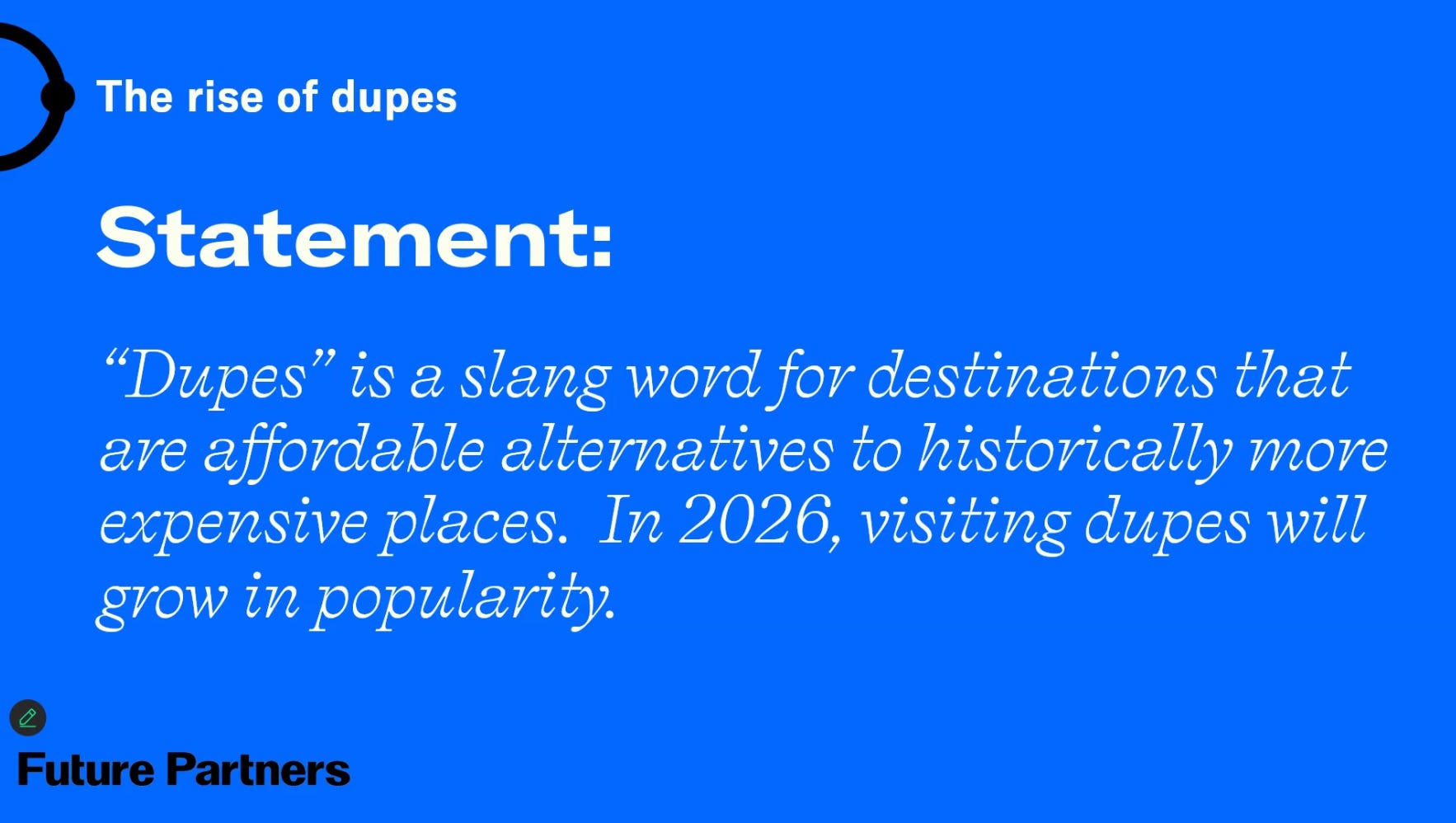
If you’re a CEO, your primary competitor isn’t your comp-set; it’s an undiscovered town in Indiana that just hit the viral lottery while you were adjusting your media buying strategy. The discomfort compounds as TikTok closes the loop. With the rollout of integrated Travel Ads, the platform has officially graduated from a “top-of-funnel” inspiration tool to a full-stack transaction engine.
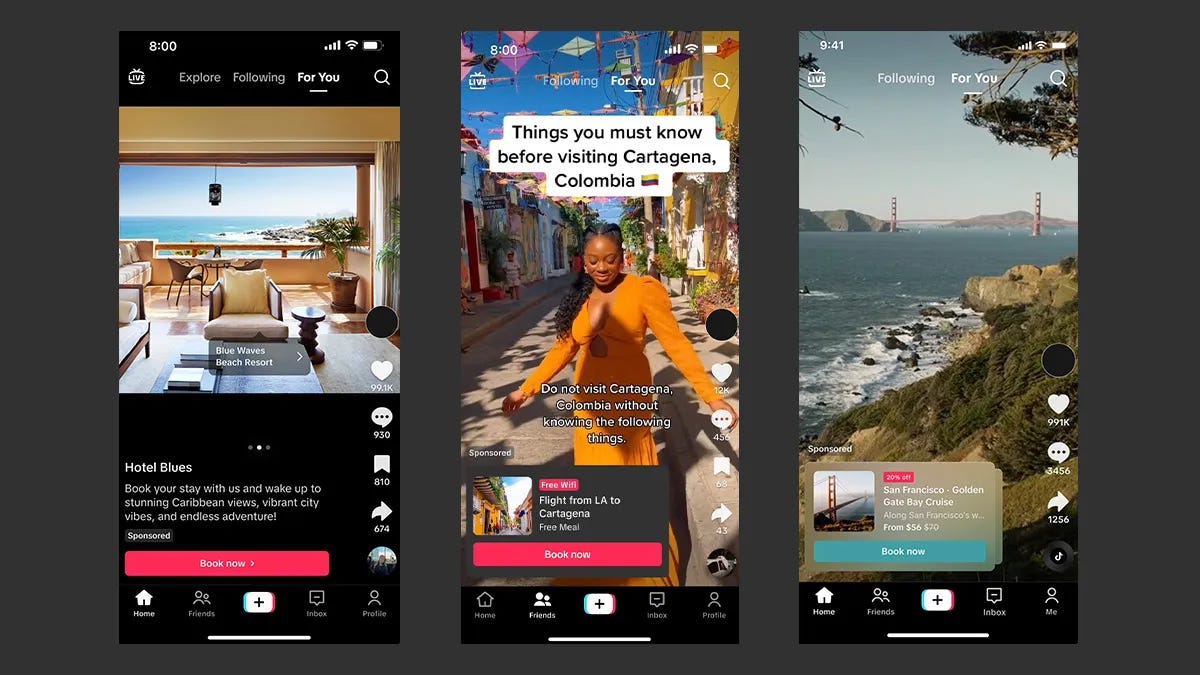
The travel journey is officially relocating to inside the app, allowing visitors to move from discovery to a hotel deposit without ever being forced to navigate archaic 2016-era websites. The data makes a “wait and see” approach look like a death wish as 66% of users now treat TikTok as their primary search engine for travel, and they are 2.6x more likely to book there than on any other platform.
The 14x Reality: Optimizing for a Dead Internet
At this point, saying you have a presence on social is about as strategically useful as saying you have a phone number. “Presence” implies it’s an option; that option has left the building. TikTok’s internal ad data shows travel content generating up to 14x higher engagement than traditional video.
Your audience has been trained by algorithms far smarter than your dashboards to make travel decisions in seconds, not sessions. In 2026, 62% of users who book do so within a week of the first swipe. If you’re still not prioritizing short-form video, still chanting “I believe” like this is #ConformityGate, you’re optimizing for a version of the internet that doesn’t exist.
Visitors Still Want to Travel, They’re Just Done Paying for Bullshit
By late 2025, U.S. travel data hit a wall of reality: Americans still want to go, but they are ruthlessly selective about what they’re willing to pay for and far less patient with anything that feels overpriced, underwhelming, or insulting to their intelligence.
Deloitte found that 54% of Americans still planned to travel, even as expected spend dropped roughly 18% year over year. Millennials and Gen Z pulled back hardest, with Gen Z cutting budgets by an average of 31%. High-income travelers adjusted too. Demand didn’t disappear, though, but tolerance for inflated value propositions did.
Las Vegas became the primary stress test for this shift. Despite Strip hotels dropping rates by a full tier (often pricing $269 rooms at $189) visitor volumes still cratered, falling 11% in June and 12% in July YOY. Tourism was down 7.6% through October, even as room rates declined roughly 8% after inflation.
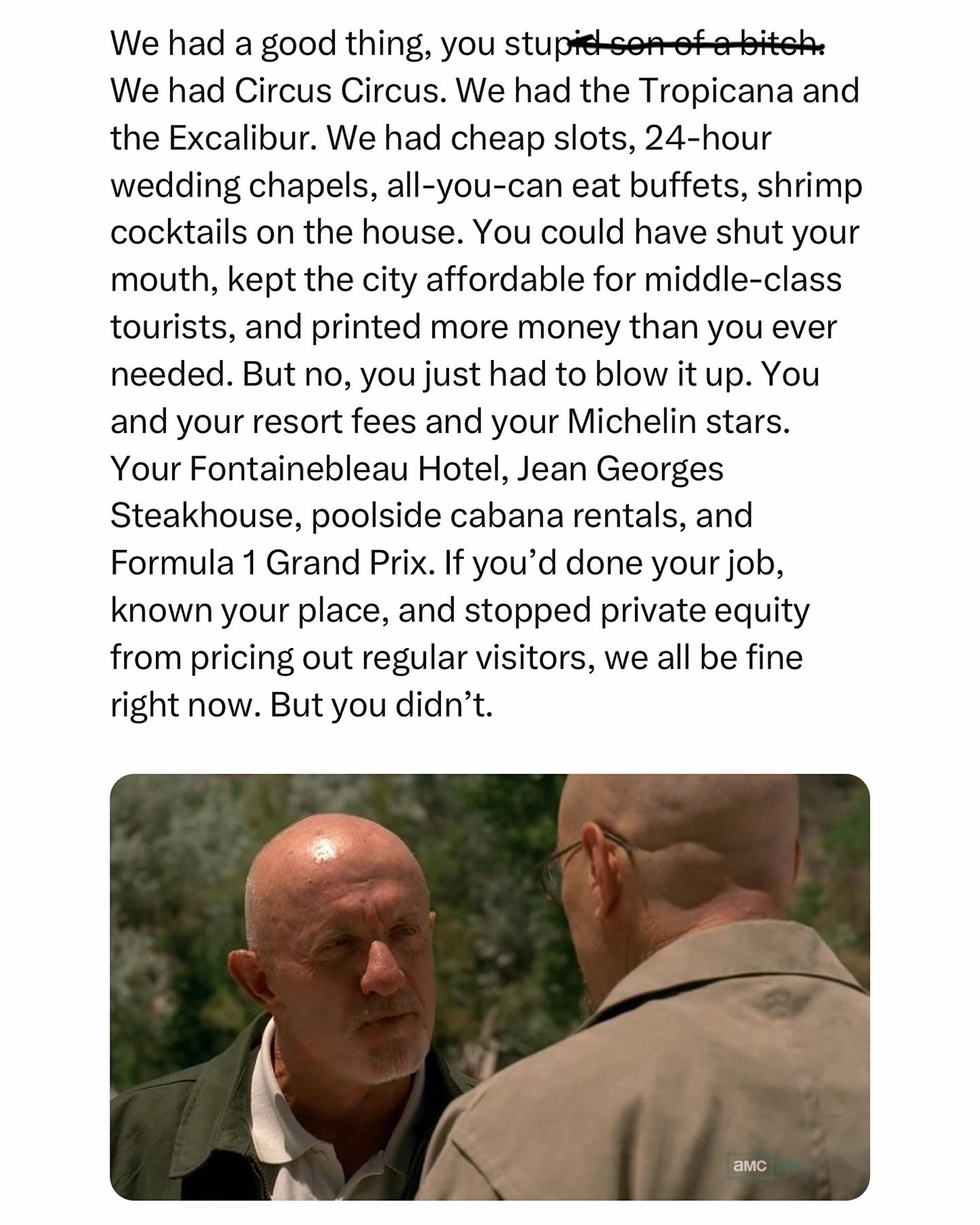
Vegas didn’t lose demand because people stopped wanting to go. It lost momentum because discounting couldn’t restore the feeling of abundance. Once the experience feels punitive instead of indulgent, visitors don’t rage-quit. They just choose somewhere else. And social media delivered the K-O with screenshots of $28 cocktails and hidden resort fees, which moved faster than any tourism campaign and thus filling the gap where brand trust used to live.
“Las Vegas is at its best when it creates a feeling of abundance. Vegas gamblers are famous for burning the candle at both ends. But if at every interface you feel put out — the rooms are overbudget, the food is expensive, and the odds you face at the tables are tilted even further against you, you might reconsider your next trip.” — Nate Silver, Author, On The Edge and Silver Bulletin
Bottom Line: Existing Isn’t the Same as Being Chosen
Visitors are still spending, but they just aren't willing to feel stupid while doing it. In an algorithm-mediated world, value perception isn't a quarterly KPI to hit, it’s a real-time verdict enforced by link shares in the group chat. When price drifts from experience, the market doesn’t wait for your quarterly report to correct you. It just quietly moves on.
Systems now decide what gets surfaced, and they don’t care about internal politics. Even now, we still Ooo and Ahh at the best hype-videos of announced host cities for our next travel conference. That power of narrative storytelling has inverted. Visitors now co-author discovery through feeds, prompts, and shares, rewarding what feels useful, authentic, and priced appropriately for the moment. Everything else scrolls past without ceremony.
There are now two choices for DMOs:
One leads to technical existence without relevance, where the destination technically appears on maps but rarely on the feed.
The other offers a real shot at staying in the conversation by adapting to systems that reward fluency over control and usefulness over polish.
Decision-makers, here are the plays I’d run these next few weeks with your team:
Pivot from SEO to AEO (Answer Engine Optimization)
Stop optimizing for keywords and start structuring your data (Schema.org) so AI agents like ChatGPT and Google Gemini can actually “read” your inventory. If the little bots can’t find it, the human never will.
Kill The Brand Anthem Video
Trade one $100k brand anthem for fifty $2k creator, locally-led videos. Get your local video production company on a retainer, hire college students on contract. The algorithm rewards pacing and cultural fluency over high-production gloss.
Adopt “Defensive” AI
Use chatbots to solve the punitive parts of travel: parking, FAQs, hours and logistics. This reduces friction and build brand trust. But don’t blow your budget if your goal is to inspire.
Embrace the “Dupe” Strategy
If you aren’t a Tier-1 hub, position yourself as the high-value alternative to the overcrowded, overpriced incumbent destination.
Adaptation remains optional only until invisibility becomes permanent. By then, the decision has already been made for you by platforms and algorithms that did not bother to ask permission.

This ran first on Signals
Emily writes weekly on AI, discovery, and what it does to destination marketing. Subscribe and it lands in your inbox before it lands here.