The Search Bar Changed. The DMO Strategy Has Not.
For DMOs trying to make sense of the new Google search bar, the latest visitor data, and the AI experiment freaking me out.
Emily Zertuche / May 28, 2026 / 11 min read

Google's May 2026 search update has rebuilt how destinations are discovered, with AI Mode now serving over one billion monthly users and citation overlap with traditional rankings collapsing to between 17 and 38%. For DMOs, this means visibility is no longer earned by ranking, it is earned by being cited.
Good afternoon industry friends.
In Melbourne, Australia, there is a research lab called Cortical Labs that has been…literally… growing 200,000 living human neurons on a silicon chip, and earlier this year they taught those neurons to play Doom. Yes, the 1993 first-person shooter.

Ahh, sweet! Man-made horrors beyond my comprehension can play Doom! Real human brain cells, grown from stem cells, learning to navigate corridors and shoot at digital demons in a video game from the year of the dial-up modem!
According to Scientific American and Cortical Labs’ own published research, there are at least three labs in three different countries doing some version of this “work”. The field has a name now, btw. “Organoid Intelligence” (ew, gross.) and funding to match. I am not making this up and it’s freaking me out. The world is getting super weird, and fast.
I bring this up not because it directly affects your DMO budget (yet) but because the rate at which the operating environment is shifting right now is definitely not normal. While the AI industry pays SpaceX $1.25 billion for the next six months for GPU compute and Google rebuilds the search bar around AI Mode, mad scientists in three different countries are growing human neurons on microchips and asking them to play video games. And I also heard that they throw them away after a hundred days to make sure that they “don’t gain consciousness”. What even???
Multiple futures are arriving on multiple tracks at once. We are not in front of the curve anymore. The curve is changing shape while we are standing on it.
Two more directly relevant tracks landed in the last ten days.
The first came from Longwoods International, in Wave 107 of their American Travel Sentiment study, fielded May 5–7 and published May 19. 40% of Americans intending to travel in the next six months now say higher gas prices are greatly impacting their plans, up from 33% the previous month and 21% just two months before that. My husband puts gas in his truck, and he always has to cap it out at $100, and the tank is not even full.
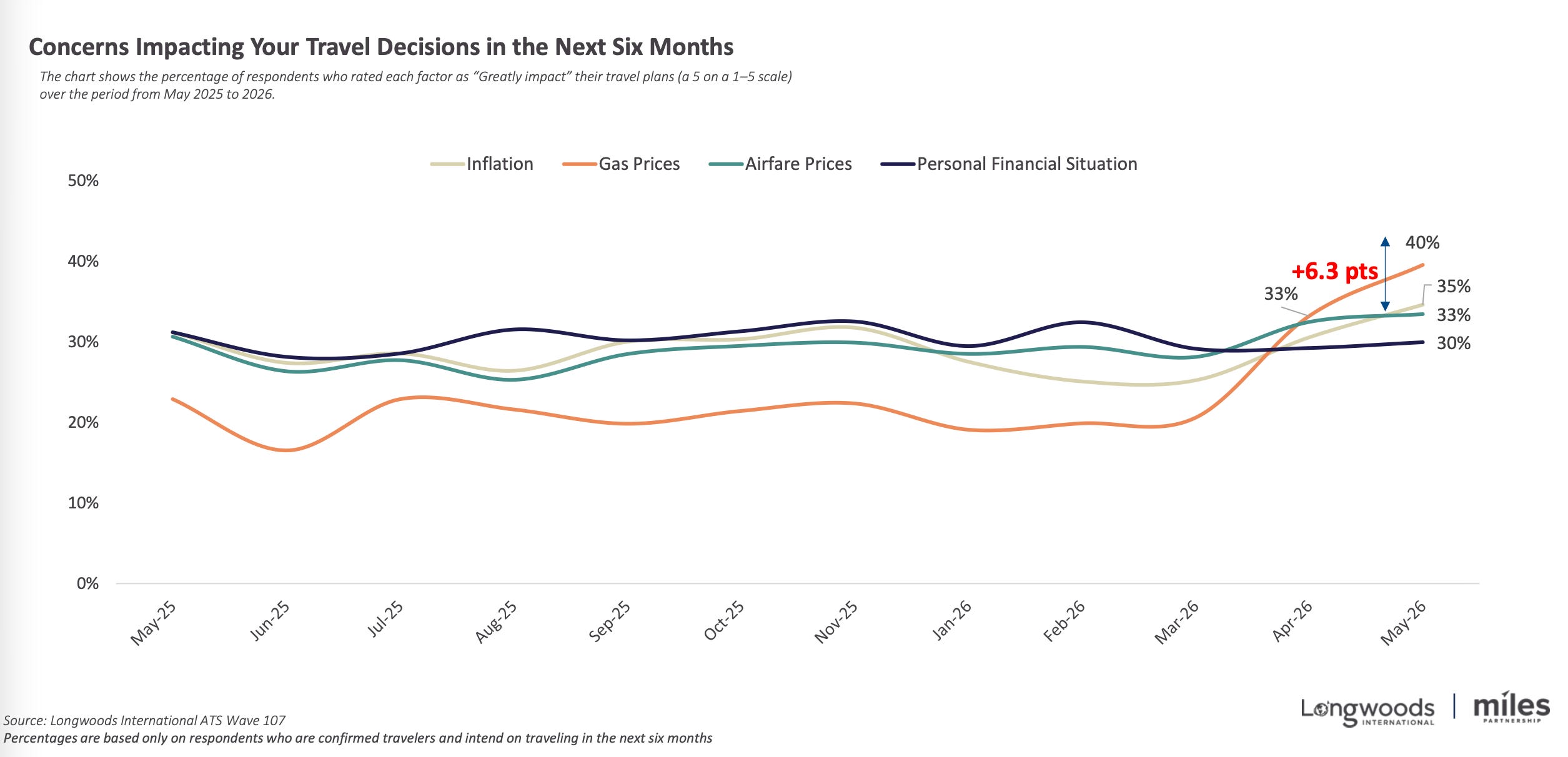
36% are planning to travel closer to home. 37% of those who had been planning international trips are now replacing them with a domestic trip instead. 90% of those surveyed still plan to take a trip in the next six months.
The second came out of Mountain View. On the same Tuesday, Google announced at I/O that its AI Mode search experience had passed one billion monthly active users, with Liz Reid calling the redesigned Search box the biggest upgrade to the product in more than 25 years. A week later (yesterday actually), Google extended its Preferred Sources feature into AI Overviews and AI Mode, and rolled out a new Highly Cited badge that explicitly rewards sources widely referenced across the broader media ecosystem.
The synthesis is the thesis. American visitors are pulling closer to home in significant numbers, and the front door to every domestic destination has just been rebuilt around AI citation.
We have a domestic travel surge meeting a citation-driven discovery environment, at the exact same moment, with the exact same audience.
What Just Happened?
The shift Google announced over the last two weeks is structural, and it’s pretty significant.
For most of the modern web, organic visibility was a function of ranking. You earned a top 10 position on a results page, and a meaningful share of clicks followed. That model is now broken in two separate places at the same time.
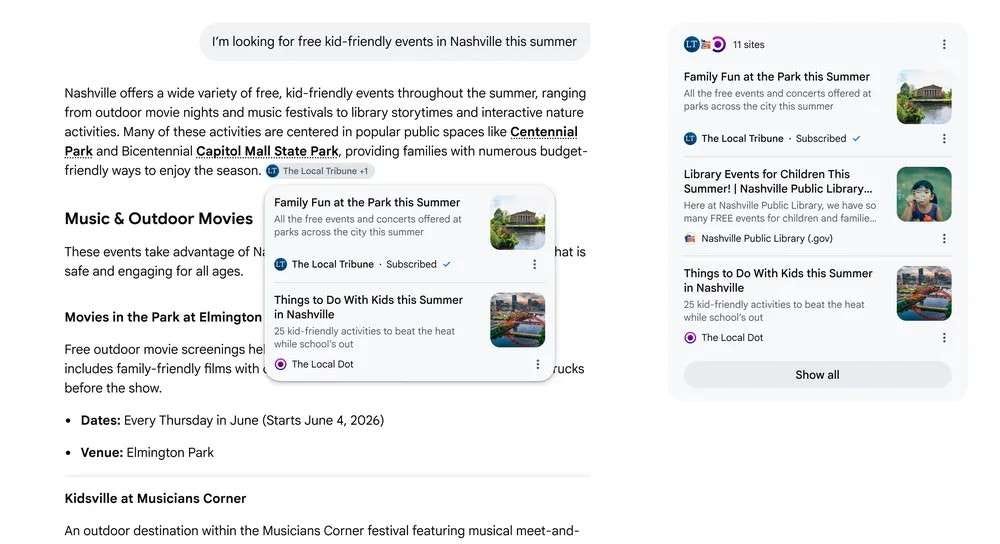
In Google’s AI Mode, 93% of searches end without a click, per Pew Research data published in 2025. And the overlap between top-10 organic rankings and AI Overview citations collapsed from roughly 75% in mid-2025 to between 17 and 38% by early 2026, according to multiple SEO industry studies. Ranking first means much less than it did twelve months ago. Being cited (named, quoted, surfaced inside the AI’s synthesized answer) is the unit of visibility that compounds now.
The early travel-industry indicators are already in. TripAdvisor reported a 33% decline in SEO-driven visits and is, for the second time in several years, evaluating “strategic alternatives,” which is corporate language for we are not sure what business we are in anymore.
HubSpot lost between 70 and 80% of organic traffic between November 2024 and Q2 2025, with CEO Yamini Rangan acknowledging on an earnings call that AI Overviews are giving users answers without sending them downstream.
These are not edge cases. They are leading indicators that even the travel industry giants are losing relevance. No one is immune to this.
Which brings me to the conversation we are all going to need a few drinks for at the next industry conference I see you at:
What exactly did the DMO industry just spend the last fifteen years doing, paying $200K to $500K to build and rebuild websites for visitors who are not coming through that front door anymore???

It is not a fun question. It’s just crazy. And we are going to have to answer it, all of us, before the 2027 budgets get drafted. Really curious to hear what each of you are planning or wanting to talk through on this topic.
The demand-side: Data is just as direct.
MMGY’s most recent Portrait of American Travelers found that 42% of U.S. leisure visitors now use AI tools to plan their trips, a 14-point increase YOY. Millennials and families with children are at 59% adoption. And McKinsey’s State of AI 2025 found that while 88% of organizations now use AI in at least one business function, only about 6% are capturing meaningful enterprise-level value from it. The adoption question is settled. The execution question is wide open, and the gap between leaders and laggards is widening really, really fast.
The Case for a Real, Locally Rooted Content Bench
The argument I keep coming back to is this. AI citation is not a content marketing problem. It is a content infrastructure problem, and the difference between those two framings is who actually OWNS the voice that gets cited.
Skift’s Travel Marketing Trends 2026 report, built on interviews with 10 senior marketing and commercial leaders across airlines, hotels, destinations, and digital platforms, framed it this way. Discovery is happening way earlier in the funnel. Decisions are being shaped before brands ever appear in the consideration set. The systems that determine “visibility” are shifting faster than most organizations can keep up with. And in a Skift Global Forum conversation between Brand USA CEO Fred Dixon and Miguel Sanz of the European Travel Commission, both leaders agreed that the next competitive battleground in destination marketing is influencing how AI models recommend destinations, not buying more ads against branded keywords.
This is the work that does not get done well by an outsourced brief and a deadline. It gets done by people who live in the community, who know what events are best in October, who have eaten at the chef’s restaurant on a Tuesday night, who have walked the trail with the local naturalist in November. The kind of specificity that builds citation density (named places, named people, original quotes, original data, original observations) can’t be assembled from a Wikipedia entry and a Pinterest board. It has to be reported. By a human. Who lives there.
Building a real, locally rooted content bench inside a DMO has three layers, and the highest-leverage move you can make this quarter is treating them as one coordinated function instead of three separate line items. The framework is genuinely simple. The execution is just not really easy.
The first layer is one full-time community storyteller whose entire job is original reporting from inside the destination. Not a content marketer running a CMS calendar and a social schedule. More beat reporter than brand voice.
The person who walks past the new mural before anyone has photographed it yet, talks to the artist, and writes the piece that ends up cited the next time a visitor asks ChatGPT about local art. A storyteller with editorial chops, a byline, a beat, and the authority to own a point of view about the destination. Think of who your local Bourdain is. (It might be you. Would be a pretty sick job to have right.)
The second layer is paid editorial relationships with 3-5 locally rooted freelancers (the food writer, the cultural reporter, the outdoor recreation expert, the family travel chronicler, the photographer who has photographed every season of the destination at every hour of the day).
The third layer, and may be the most overlooked move available to a DMO, is partnering with your local university or community college on a paid intern pipeline for content production, with real mentorship and real editorial oversight. You develop the next generation of community voices, you build content depth at the same time, and you create durable relationships between the destination organization and the institutions producing the talent your community needs. That is how a content bench becomes a real content ecosystem.
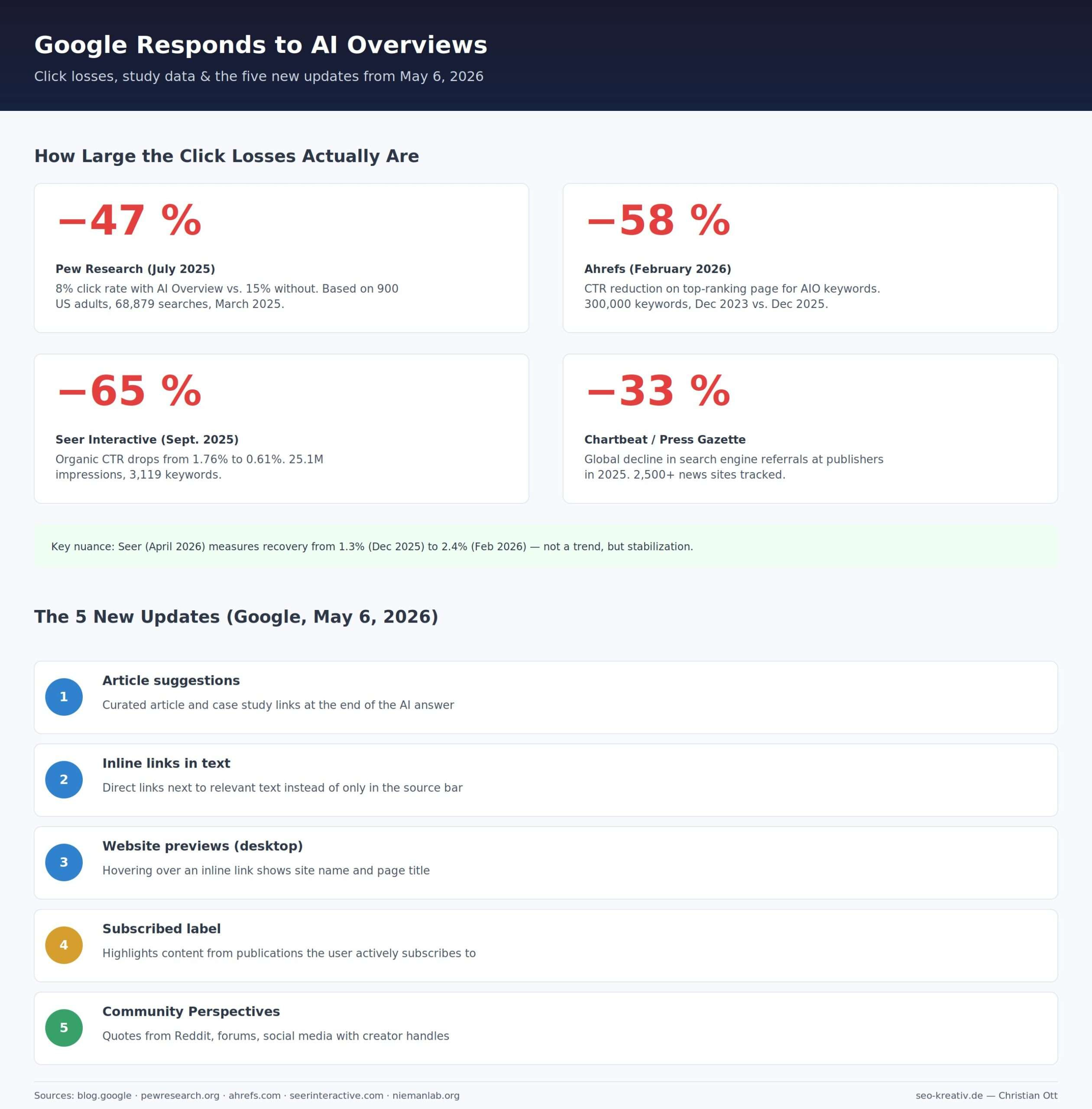
The dollar value of doing this work is not theoretical. Seer Interactive’s research, cited across the SEO industry throughout 2025 and 2026, found that brands cited in AI Overviews earn approximately 35% more organic clicks than non-cited competitors in the same category, with a consistent advantage of roughly four percentage points in paid search CTR throughout 2025. The citation premium is real, it is measurable, and it accrues to the destinations producing original, authoritative, locally rooted content. The destinations not producing it are competing for the residual traffic the AI did not absorb.
The Agent Layer Is Coming, and It Sharpens the Argument
The piece of this story that has not had enough industry conversation yet showed up in Skift on May 22, in a piece titled “B2A? AI Agents Are Travel’s New Audience — And They Don’t Care About Brands.” The argument was direct. As visitors increasingly delegate research, comparison, and even booking to AI agents, the audience reading a destination’s content shifts. The agent does not have brand loyalty. The agent does not care about the hero video. The agent has never opened a destination homepage in its life, and it never will. The destinations whose content is original, expertly sourced, locally credible, and structurally legible to a machine are the ones whose recommendations the agents will surface. Everyone else gets summarized out of the answer.
The infrastructure being built behind this future is significant. OpenAI launched a self-serve advertising platform inside ChatGPT earlier this month, allowing brands to promote products directly inside conversations. The AI discovery layer is not a phase.

The strategic implication for DMOs is sequencing. The organic citation window is open right now, today, this quarter. The paid layer is being built behind it. The destinations that invest in a real content bench now (real writers, real local journalism partnerships, real editorial infrastructure, real authority signals) will have something durable to stand on when the paid layer arrives and the OTA budgets show up to compete in the answer engine. The destinations that wait are going to spend the back half of 2027 trying to outbid Expedia inside an AI conversation, and that is not a fight a DMO budget is built to win.
Five Plays I Would Make This Month
1. Audit your current content bench, with intention.
Map the actual humans (full-time, contract, and freelance) whose names get bylines on the work going out the door. Where are the coverage gaps? Which subject areas (culinary, cultural, outdoor, family, business travel, neighborhoods) do not have a dedicated voice yet? The audit is the easiest first step and the one most DMOs have never formally done.
2. Make the case for one full-time community storyteller hire.
The case lives in two numbers. The 35% citation premium from Seer Interactive. The 14-point year-over-year jump in AI-assisted trip planning from MMGY. Both numbers favor destinations with a real, original voice. Build the business case around both.
3. Build a paid intern pipeline with your local university or community college.
This is one of the highest-ROI moves available to a DMO and almost nobody is building it intentionally. You develop the next generation of community storytellers, you build content depth, and you anchor the destination organization to the institutions producing the talent your community is going to need over the next decade.
4. Write for the AI and the human in the same draft.
Direct, clearly worded answer capsules in the opening sentences of every section. Schema, entity consistency, and structured data across every surface. Then real narrative voice and a real point of view in the body. Same content, same writer, both jobs at once.
5. Pick the community story nobody is telling, and tell it first.
The discoverability opportunity right now is in the long tail of place-based content that does not exist yet. Your destination has between 50 and 500 of these stories sitting unwritten. Publish the first one this month. Put the second one on the calendar for next month. Compound from there.
The work of representing a community has always been the work of giving voice to the people, places, and stories that make it what it is. The new search environment does not change that work. It changes the stakes of doing it well.
And look, the storytelling has always been the best part of the job. The new search bar is just making it impossible to ignore that fact for one more budget cycle.
Build the bench. Tell the stories. The communities each of us represent are counting on it.
Until next time.
Emily
This ran first on Signals
Emily writes weekly on AI, discovery, and what it does to destination marketing. Subscribe and it lands in your inbox before it lands here.